IERPP Questions Government Over GoldBod Shielding Amid Anti-Corruption Push
Think tank says blocking probe into alleged losses at GoldBod contradicts establishment of new accountability council, warning of weakened public trust in anti-corruption efforts.
The Institute of Economic Research and Public Policy (IERPP) has raised serious concerns over what it describes as inconsistencies in the government’s anti-corruption drive, following Parliament’s rejection of a proposed investigation into the Ghana Gold Board (GoldBod) at a time a new accountability institution is being established.
The concerns come after Parliament on Friday, March 27, 2026, passed the Governance Advisory Council Bill to create an independent body mandated to promote accountability, combat corruption, and protect human rights.
The proposed council is expected to strengthen oversight of public officials and reinforce standards of transparency across state institutions.
However, on the same day, the Majority in Parliament rejected a Minority motion seeking the formation of an ad hoc committee to investigate alleged financial irregularities at GoldBod, including matters linked to the gold-for-reserves programme.
The decision has triggered public debate over transparency and oversight, with critics arguing that it undermines the very accountability framework government seeks to build.
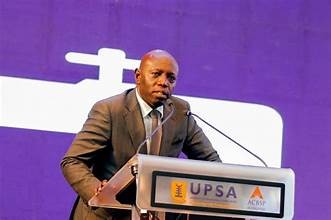
Reacting to the development, Executive Director of IERPP, Isaac Boadi, described the situation as “disturbing and ironic,” insisting that it sends conflicting signals about government’s commitment to the fight against corruption.
He questioned why a new accountability structure would be introduced while, at the same time, efforts to investigate a state institution accused of significant financial exposure are resisted.
According to him, such contradictions risk weakening public confidence in anti-corruption institutions even before they become fully operational.
IERPP further warned that shielding public institutions from scrutiny undermines the independence and effectiveness of accountability mechanisms, making it difficult for such bodies to function credibly.
The think tank argued that the use of parliamentary majority to block investigations into alleged losses estimated at $214 million sets a worrying precedent for democratic oversight.
READ ALSO: Ghana Plans New Loans Act to Tighten Control on Public Borrowing
It has therefore called on government to clarify its position, raising questions over why GoldBod is being protected from scrutiny and whether there are concerns authorities are unwilling to expose.
IERPP maintains that a credible anti-corruption framework requires consistency between policy declarations and actual governance practice, stressing that accountability must apply uniformly across all public institutions.
The ongoing debate has intensified scrutiny of Ghana’s anti-corruption architecture, with observers watching closely to see whether the new Governance Advisory Council will operate independently or face similar constraints as existing oversight bodies.