
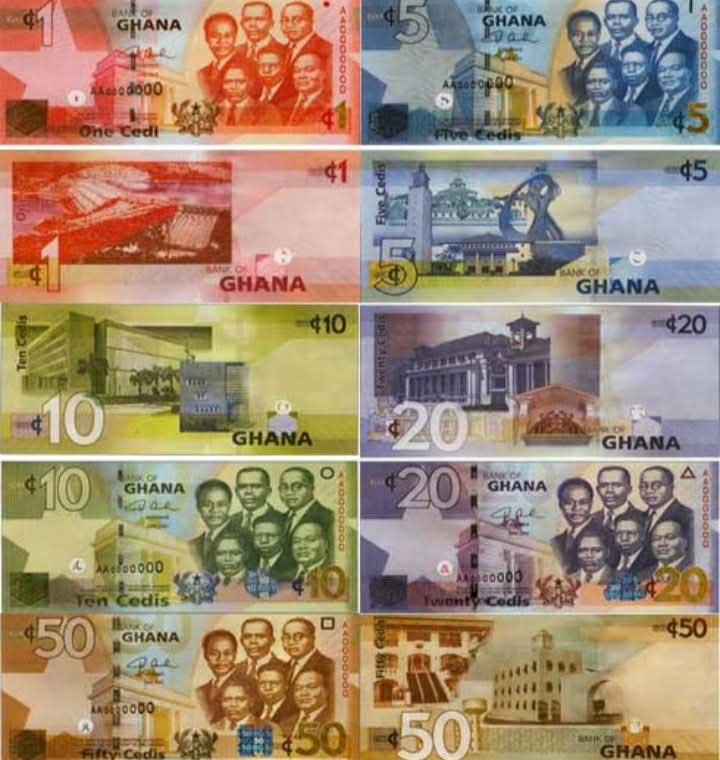
The Bank of Ghana has recorded a dramatic drop in the cost of printing and issuing the Ghanaian cedi in 2025, even as demand for physical cash continues to surge across the economy.
The development, revealed in the central bank’s latest financial statements, signals a major shift in how currency operations are managed—but also exposes deeper structural pressures that could shape monetary policy in the coming years.
At first glance, the numbers point to a clear win for cost efficiency. Total currency issuance expenses fell by more than half, dropping from over GH¢1 billion in 2024 to about GH¢471 million in 2025. This sharp reduction represents one of the most significant operational adjustments in recent years and suggests deliberate efforts by the central bank to rein in spending.
However, beneath the headline savings lies a more complex story—one that reflects changing cost drivers, rising logistical burdens, and the enduring dominance of cash in Ghana’s economy.
A Sharp Turn in Currency Production Strategy
The most striking shift came from a steep decline in the cost of printing banknotes and minting coins. These direct production expenses fell by more than 70 percent year-on-year, indicating that the central bank may have significantly optimized its currency production cycle.
Several factors could explain this development. Improved inventory management, longer-lasting banknotes, and reduced replacement rates for worn-out currency may have all contributed. In addition, the Bank of Ghana may have adjusted its procurement strategies or renegotiated contracts with currency suppliers, leading to lower overall costs.
This shift reflects a broader trend among central banks globally, where the focus is increasingly on efficiency and sustainability in currency production. For Ghana, where fiscal discipline remains a key policy priority, such savings are particularly significant.
Rising Costs in Unexpected Areas
Despite the drop in printing costs, other components of currency management moved in the opposite direction. Expenses related to agency services—often tied to outsourced logistics and operational support—increased notably, while the cost of importing materials and services linked to currency production also rose.
Even more concerning is the sharp spike in “other currency expenses,” which saw an extraordinary increase. While the central bank has not fully broken down this category, analysts suggest it could include restructuring costs, system upgrades, or one-off expenditures linked to changes in currency management operations.
These rising ancillary costs have partially offset the savings from reduced printing, highlighting a key shift: currency management is no longer just about producing notes and coins. Instead, it is becoming increasingly dependent on logistics, service contracts, and external operational factors.
Cash Still King in Ghana’s Economy
At the same time, the demand for physical cash continues to grow. Currency in circulation rose significantly in 2025, reflecting a persistent reliance on cash transactions despite ongoing efforts to promote digital payments.
This trend underscores a critical reality: while Ghana has made notable progress in mobile money and digital finance, cash remains deeply embedded in everyday economic activity. Informal sector transactions, rural economies, and small businesses still depend heavily on physical currency.
The increase in cash circulation also places additional pressure on the central bank’s operations. More cash in the system means higher costs for distribution, security, and handling—even if the cost of printing itself has declined.
A Changing Cost Structure
What emerges from the data is a fundamental shift in how currency-related costs are structured. In the past, printing and minting dominated expenditure. Today, however, non-production costs are taking center stage.
This transformation has important implications. It suggests that future efficiency gains will not come solely from reducing printing expenses but from improving logistics, streamlining operations, and enhancing transparency in service contracts.
For policymakers, this raises critical questions:
Are current outsourcing arrangements delivering value for money?
How sustainable are the rising ancillary costs?
And what reforms are needed to ensure long-term efficiency?
Broader Economic Implications
The developments come at a time when Ghana is navigating a delicate economic recovery, with efforts focused on stabilizing inflation, strengthening the currency, and restoring investor confidence.
Lower currency production costs could ease some fiscal pressure, but the broader cost dynamics indicate that challenges remain. Rising operational expenses and increasing cash demand suggest that structural issues in the financial system are yet to be fully addressed.
Moreover, the continued reliance on cash may slow down Ghana’s transition to a more digital economy. While mobile money platforms have expanded rapidly, the persistence of cash usage highlights gaps in financial inclusion, digital infrastructure, and trust in electronic payment systems.
What Comes Next?
Looking ahead, the Bank of Ghana is likely to face growing pressure to balance efficiency with transparency. The sharp rise in certain cost categories—particularly those not directly tied to production—will attract scrutiny from policymakers, analysts, and the public.
There is also a strong case for accelerating digital payment adoption. Reducing dependence on cash could help lower long-term operational costs and improve the efficiency of the financial system. However, achieving this will require coordinated efforts across government, financial institutions, and the private sector.
READ ALSO:Economic Growth Without Jobs Widens Inequality, Labour Says
In the short term, the central bank may focus on tightening cost controls, reviewing contracts, and improving reporting clarity. Over the longer term, the challenge will be to build a more resilient and modern currency management system that aligns with Ghana’s broader economic transformation.
A Mixed but Telling Signal
The sharp drop in cedi printing costs is undoubtedly a positive development. It demonstrates that meaningful efficiency gains are possible within Ghana’s monetary operations. Yet, the simultaneous rise in other expenses and the continued growth in cash circulation tell a more nuanced story.
Ultimately, the data reflects an evolving system—one in transition, where old cost structures are giving way to new complexities. For Ghana, the task now is to ensure that this transition leads not just to lower costs, but to a more transparent, efficient, and future-ready financial system.
Source: capitalnewsonline.com
