
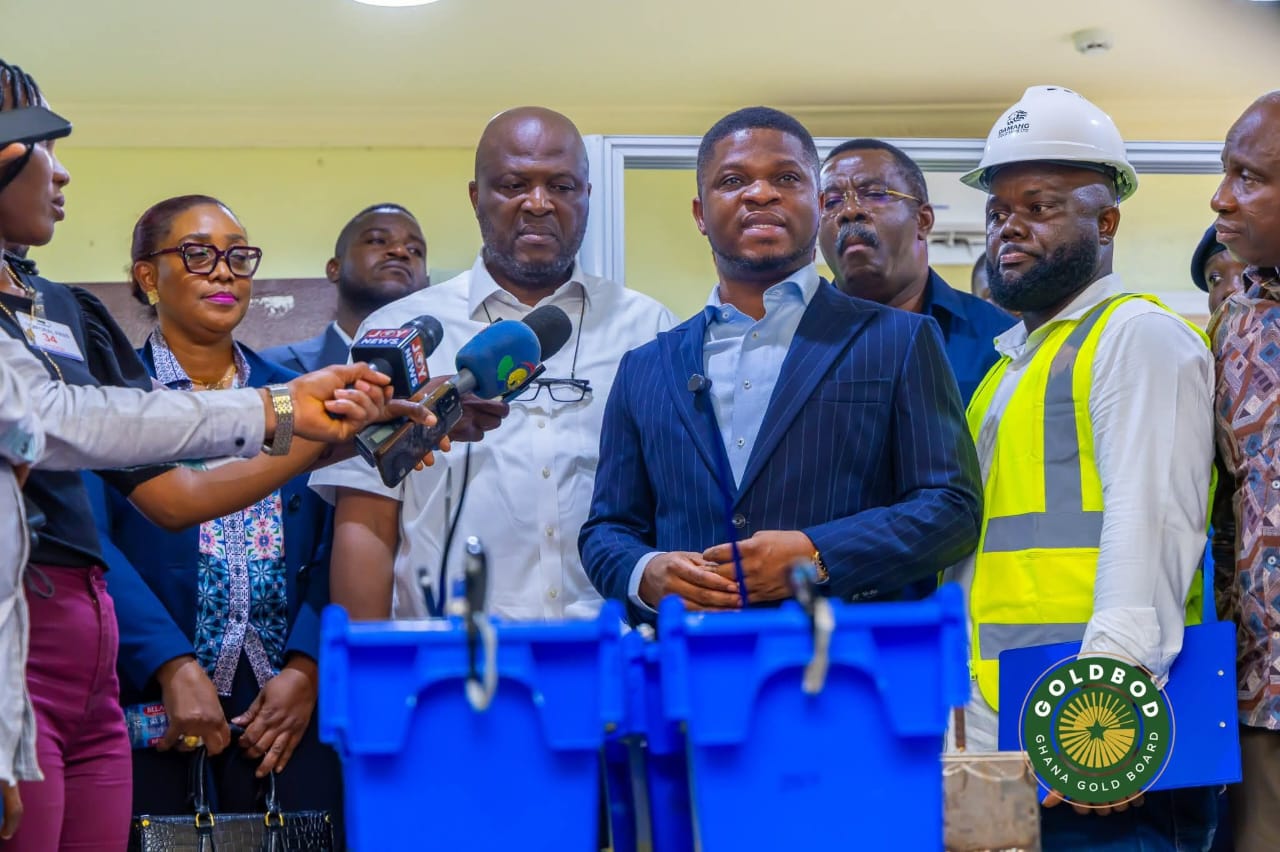
Ghana has taken a decisive step toward strengthening its economic resilience after Damang Gold Mine Ltd., linked to businessman Ibrahim Mahama, sold its entire initial gold output to the Ghana Gold Board (GoldBod) in a landmark transaction aimed at boosting the country’s foreign exchange reserves.
The move, which industry watchers describe as a strategic turning point rather than a routine commercial sale, reflects a growing policy shift by government to harness Ghana’s mineral wealth more directly for macroeconomic stability.
At a time when the country continues to navigate currency pressures and external financing challenges, the decision to channel domestically produced gold into national reserves is being viewed as both timely and potentially transformative.
A New Model for Managing Ghana’s Gold Wealth
The transaction involved approximately 110 kilogrammes of gold, which was delivered to GoldBod’s assay facility at the Kotoka International Airport. From there, the gold is expected to be valued, refined, and ultimately transferred to the Bank of Ghana as part of the country’s reserve assets.
Officials say the deal forms part of a broader policy direction under the Ghana Accelerated National Reserve Accumulation Programme (GANRAP), an initiative designed to build stronger financial buffers and reduce the country’s exposure to external economic shocks.
For decades, Ghana—Africa’s leading gold producer—has paradoxically struggled to translate its vast mineral output into substantial reserve growth. Much of the gold produced locally has historically been exported through offshore arrangements dominated by multinational mining firms, limiting the direct impact on the country’s financial position.
This latest transaction signals an attempt to reverse that trend.
Why This Matters Now
The timing of the deal is significant. Ghana’s economy has faced persistent pressure in recent years, including cedi volatility, rising inflation, and constrained access to international capital markets. In such an environment, building strong foreign exchange reserves is critical.
By purchasing gold locally instead of relying heavily on dollar inflows, the Bank of Ghana can strengthen its reserves without putting additional pressure on the foreign exchange market. This approach helps stabilise the cedi while reducing dependence on external borrowing.
Economists say this model offers a dual advantage: it not only boosts reserves but also insulates the economy from global financial shocks. Unlike currencies, gold retains intrinsic value, making it a reliable hedge during periods of uncertainty.
From Resource Extraction to Economic Strategy
What sets the Damang transaction apart is its strategic intent. Rather than treating gold purely as an export commodity, policymakers are repositioning it as a tool for economic management.
The involvement of the Ghana Gold Board as an intermediary ensures that gold produced within the country is first assessed for domestic value before being exported. This creates a direct pipeline between the mining sector and national economic policy.
It also reflects a growing emphasis on local participation in the extractive industry. Analysts note that indigenous ownership and partnerships could play a critical role in aligning production decisions with national priorities.
Implications for the Cedi and Inflation
A stronger reserve position gives the central bank more room to intervene in the foreign exchange market when needed. This can help smooth sharp fluctuations in the cedi and provide a buffer against speculative pressures.
In practical terms, this could translate into:
Greater exchange rate stability
Improved investor confidence
Better control over inflation
With more reserves at its disposal, the Bank of Ghana is better positioned to manage liquidity and respond to external shocks without resorting to aggressive monetary tightening.
Reducing Dependence on External Financing
One of the most significant long-term benefits of the policy is its potential to reduce Ghana’s reliance on external borrowing. Traditionally, countries build reserves through exports or capital inflows such as loans and foreign investment.
However, global financial conditions have tightened in recent years, making borrowing more expensive and less predictable. By converting gold into reserve assets domestically, Ghana can generate its own buffers without relying heavily on volatile external sources.
This approach aligns with broader efforts to build a more self-sustaining economy—one that leverages internal resources rather than external debt.
Boosting Local Value Addition
Beyond macroeconomic gains, the initiative has important implications for industrial development. Keeping more of the gold value chain within Ghana—from assaying to refining—can create jobs, build technical expertise, and stimulate related industries.
It also strengthens the case for developing local refining capacity, which has long been identified as a gap in Ghana’s mining sector. Increased domestic processing could reduce the need to export raw gold while capturing more value within the country.
A Signal to the Mining Industry
The Damang deal is being closely watched as a potential model for other mining companies operating in Ghana. If replicated at scale, the cumulative effect could significantly transform the country’s reserve position.
Policy experts argue that broader industry participation will be crucial. Large-scale mining firms, which account for the bulk of Ghana’s gold output, will need to align with the new framework for the policy to achieve its full impact.
The message from government is clear: Ghana must derive greater economic value from its natural resources.
What Comes Next
While the initial consignment of 110 kilogrammes may appear modest, its symbolic significance is substantial. It represents the beginning of a policy shift that could redefine how Ghana manages its mineral wealth.
Key questions going forward include:
Will other mining companies adopt similar domestic sale arrangements?
Can Ghana scale up refining and storage capacity to support increased supply?
How quickly will the policy translate into measurable improvements in reserves and currency stability?
If successfully implemented and expanded, the initiative could position Ghana as a model for other resource-rich economies seeking to move beyond raw exports toward strategic asset management.
READ ALSO:Ghana Stocks Surge Nearly 60% as Treasury Bill Demand Weakens
A Turning Point for Ghana’s Economic Strategy
At its core, the Damang-GoldBod transaction reflects a broader rethink of economic policy—one that prioritises resilience, sustainability, and local value creation.
For a country long dependent on commodity exports and external financing, the shift toward internally generated reserves marks a significant evolution.
Whether this approach delivers lasting results will depend on consistency, scale, and industry cooperation. But for now, the message is clear: Ghana is beginning to take greater control of its gold—and, by extension, its economic future.
Source: capitalnewsonline.com
