Experts Warn Africa Must Shape Its Own Energy Transition Path
Africa Energy Transition, Energy Inequality Africa, Just Energy Transition, Abdul Gafaru Abdulai, ISSER University of Ghana, Ghana Energy Policy, Renewable Energy Africa, Climate Change Africa, Energy Security Africa, Green Energy Transition, Energy Policy Accra Conference.

Africa must take decisive control of its energy future by harnessing its own resources and designing a transition pathway that reflects its development realities, experts have urged at a high-level conference in Accra.
The call was made at the opening of the International Conference on the Political Economy of the Just Energy Transition and Inequality in Africa, held at the Institute of Statistical, Social and Economic Research (ISSER) of the University of Ghana.
Lead convener of the conference, Prof. Abdul Gafaru Abdulai, said global energy disruptions and the shift away from fossil fuels present both risks and opportunities for Africa, stressing that the continent must not remain a passive observer in shaping global energy decisions.
“We are confronted with an inevitable phenomenon, the world is transitioning away from traditional energy sources, and Africa must think critically about what this means for us,” he said.
He noted that although Africa contributes the least to global emissions, it continues to suffer disproportionately from climate change impacts, describing the situation as a structural global imbalance.
“Our continent occupies a paradoxical position. We contribute the least to climate change, yet we are the ones bearing the brunt of its impact,” he added.
Prof. Abdulai warned that much of the global debate on energy transition has been dominated outside Africa, limiting the continent’s influence on decisions that directly affect its economies and populations.
He said the Accra conference was designed to bridge that gap by creating space for African-led discussions on how the transition affects inequality, livelihoods, and long-term development priorities.
He further highlighted growing geopolitical tensions and energy supply disruptions as evidence that countries are increasingly prioritising domestic energy security, urging African states to follow suit by investing in local resources and renewables.
He also cautioned that while the energy transition is unavoidable, it must be carefully managed to avoid worsening economic vulnerabilities in resource-dependent African economies.
READ ALSO: IERPP Questions Government Over GoldBod Shielding Amid Anti-Corruption Push
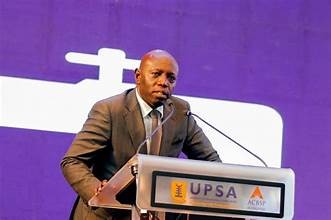
Delivering the keynote address, Deputy Minister for Energy and Green Transition, Richard Gyan-Mensah, said Ghana’s approach to energy reform is focused on ensuring a fair and inclusive transition that does not deepen existing inequalities.
He noted that Ghana has achieved nearly 90 per cent electricity access but acknowledged persistent gaps in reaching remote and underserved communities.
The Deputy Minister emphasized that government alone cannot drive the transition, calling for stronger collaboration with the private sector and development partners to achieve national and continental energy goals.
He announced ongoing reforms, including the creation of a Renewable Energy and Green Transition Fund to support local innovation, attract investment, and improve efficiency in the power sector.
He also disclosed plans to expand solar-powered street lighting nationwide as part of efforts to reduce maintenance costs and improve public safety.
According to him, Ghana’s broader energy strategy is anchored on reducing import dependence, strengthening energy security, and supporting long-term industrial growth.
The Danish Ambassador to Ghana, Jacob Linulf, also called for sustained global commitment to climate action despite rising geopolitical tensions, stressing that the benefits of green transitions outweigh short-term uncertainties.
He urged countries not to lose focus on long-term sustainability goals, noting that energy transition efforts are already improving living conditions in many parts of the world.