
Ghana’s improving economic indicators are failing to deliver what matters most to citizens jobs, decent wages and economic security labour leaders have warned, calling for a fundamental shift in the country’s development strategy.
At the centre of the growing concern is a stark reality: while inflation is easing and the cedi is showing signs of stability, millions of Ghanaians particularly the youth remain either unemployed, underpaid or trapped in insecure work.
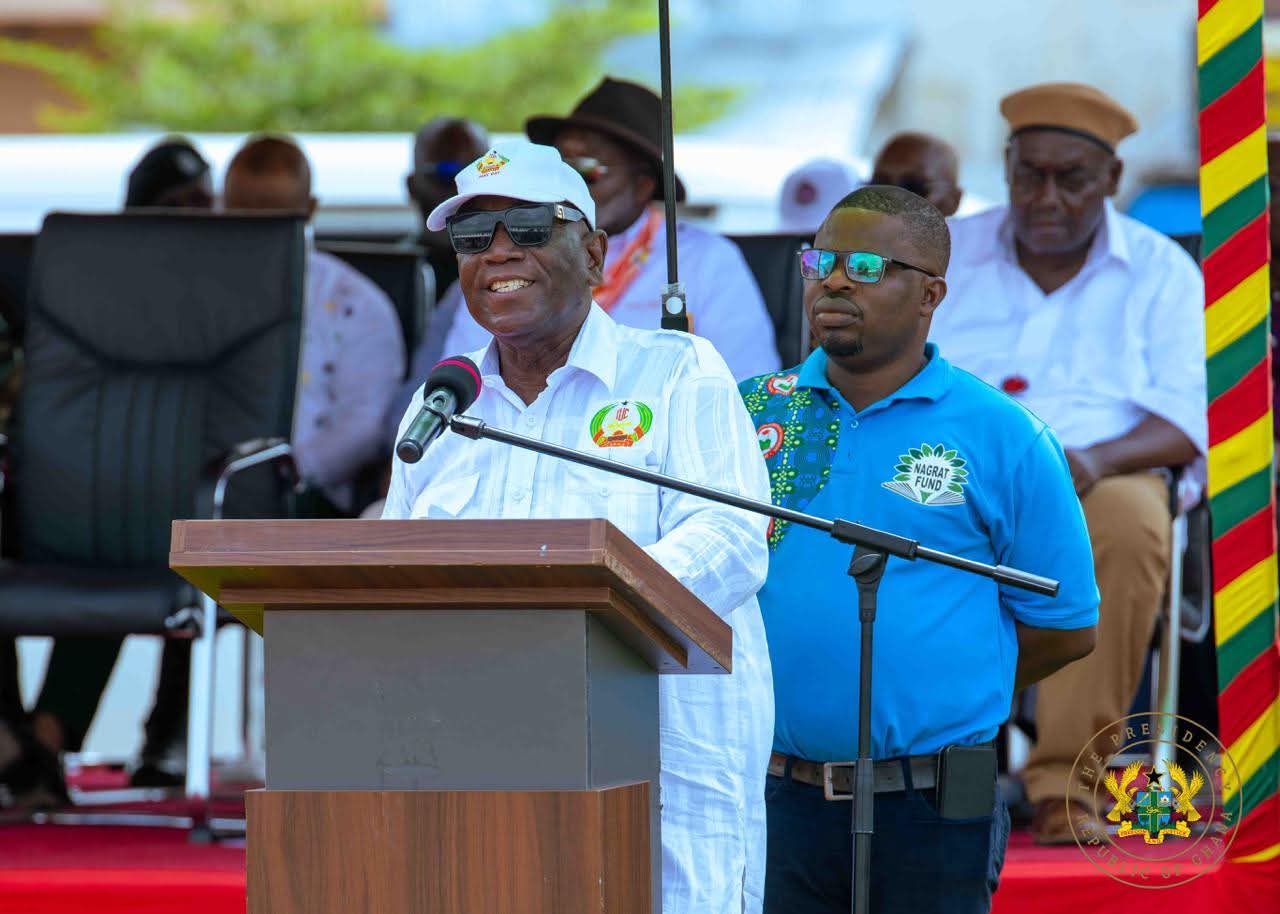
Addressing thousands of workers at the 2026 May Day celebration in Accra, Secretary-General of the Trades Union Congress (TUC), Joshua Ansah, delivered a blunt assessment of the country’s economic direction.
“Economic growth without jobs is exclusion,” he stressed, warning that Ghana risks widening inequality if policy priorities remain focused on macroeconomic stability without translating gains into livelihoods.
A recovery that is not reaching workers
Ghana has spent the past few years navigating one of its most difficult economic periods, marked by high inflation, currency depreciation and debt restructuring. Recent policy efforts have begun to stabilise key indicators, offering hope of recovery.
However, organised labour argues that the recovery is largely statistical—and not yet felt in households.
According to the TUC, unemployment remains high, with youth unemployment estimated at 34%, while nearly 80% of those employed are in the informal sector, often without job security or social protection.
Even for those working, incomes remain a major concern.
With the daily minimum wage hovering around GH¢21.78 and entry-level public sector salaries averaging about $75 a month, many workers struggle to meet basic needs such as food, housing, healthcare and transportation.
This disconnect between macroeconomic gains and everyday realities, labour leaders say, is evidence that Ghana’s growth model is not inclusive.
The deeper structural problem
Beyond short-term economic pressures, the TUC points to a long-standing structural issue in Ghana’s development path.
For decades, economic policy has prioritised GDP growth and macroeconomic stability, with the expectation that jobs would naturally follow. But that assumption, labour leaders argue, has not held.
Despite averaging over 5% annual growth since the late 1980s—and even recording peaks such as 15% growth in 2011—job creation has consistently lagged behind. The problem, analysts say, lies in the nature of that growth.
Ghana’s economy has been largely driven by natural resources, including gold, oil and cocoa, as well as imports and external financing. These sectors, while important for revenue, generate relatively few jobs compared to labour-intensive industries like manufacturing.
By contrast, countries that have successfully reduced unemployment at scale such as China have relied heavily on industrialisation and export-led manufacturing.
For Ghana, labour leaders argue, the lesson is clear: without building a strong productive base, economic growth will continue to bypass large sections of the population.
Youth at the centre of the crisis
The employment challenge is most visible among young people. Each year, thousands of graduates enter the labour market, often after years of significant financial investment by families and the state. Yet many struggle to find jobs that match their qualifications, with some waiting years before securing employment.
The scale of the crisis is reflected in overwhelming demand for limited public sector opportunities. Recent recruitment exercises in the security services, for instance, attracted more than half a million applicants.
For labour leaders, this is not just an economic issue it is a potential social risk.
A growing population of educated but unemployed youth could heighten frustration, deepen inequality and increase vulnerability to social unrest if not addressed.
Policy shift: From stability to jobs
The TUC is now pushing for a clear pivot in policy from stabilisation to job creation. Central to this is a renewed focus on manufacturing and agro-processing, sectors seen as capable of generating large-scale employment while adding value to local resources.
Labour leaders argue that Ghana must reduce its dependence on imports and instead prioritise local production.
“Producing what we consume is key,” the TUC emphasised, warning that current trade patterns are effectively exporting jobs while weakening domestic industries.
There are also concerns about flagship policies such as the proposed 24-hour economy. Without deliberate support for local production, labour leaders caution, such initiatives could end up boosting imports rather than creating jobs.
Private sector and credit constraints
Another critical issue is the cost of financing. Despite declining inflation, lending rates in Ghana remain high, limiting the ability of businesses to expand and create jobs.
The TUC is calling for reforms in the financial sector, including measures to narrow the gap between lending and deposit rates, to make credit more accessible for businesses—particularly small and medium enterprises.
A stronger private sector, labour leaders argue, is essential for sustainable job creation.
Workers’ welfare under strain
Beyond employment, the quality of jobs remains a major concern. Many workers face low wages, limited benefits and weak labour protections. Pension coverage is also uneven, with significant disparities in payouts.
The TUC is advocating for a comprehensive income policy anchored on a living wage, alongside urgent pension reforms to ensure fairness and adequacy.
There are also rising concerns about labour rights violations, including worker intimidation, unclear employer responsibilities and the misuse of private employment agencies.
Labour leaders warn that increasing politicisation in public sector recruitment and promotions could further undermine fairness and national cohesion.
Broader economic pressures
The challenges extend into other sectors of the economy. In agriculture, cocoa farmers are grappling with falling incomes and delays in purchasing stockpiled produce. In critical sectors such as health and education, trained professionals—including nurses and teachers remain unemployed despite clear staffing gaps.
At the same time, environmental concerns persist, particularly around illegal mining, which continues to threaten forests and water bodies despite policy interventions.
What happens next?
The message from organised labour is clear: Ghana’s economic recovery must be redefined. While stabilisation remains important, the next phase of policy must prioritise job creation, income growth and long-term livelihoods.
This will likely require coordinated action across multiple fronts industrial policy, trade reform, financial sector adjustments and labour protections.
READ ALSO:Stronger Regional Journalism Key to Africa’s Democratic Resilience — Experts
It will also demand sustained dialogue between government, labour and the private sector to ensure that economic gains translate into real improvements in living standards.
For now, the warning from labour leaders serves as both a critique and a roadmap. Without jobs, growth risks becoming an abstract achievement—one that leaves too many Ghanaians behind.
