
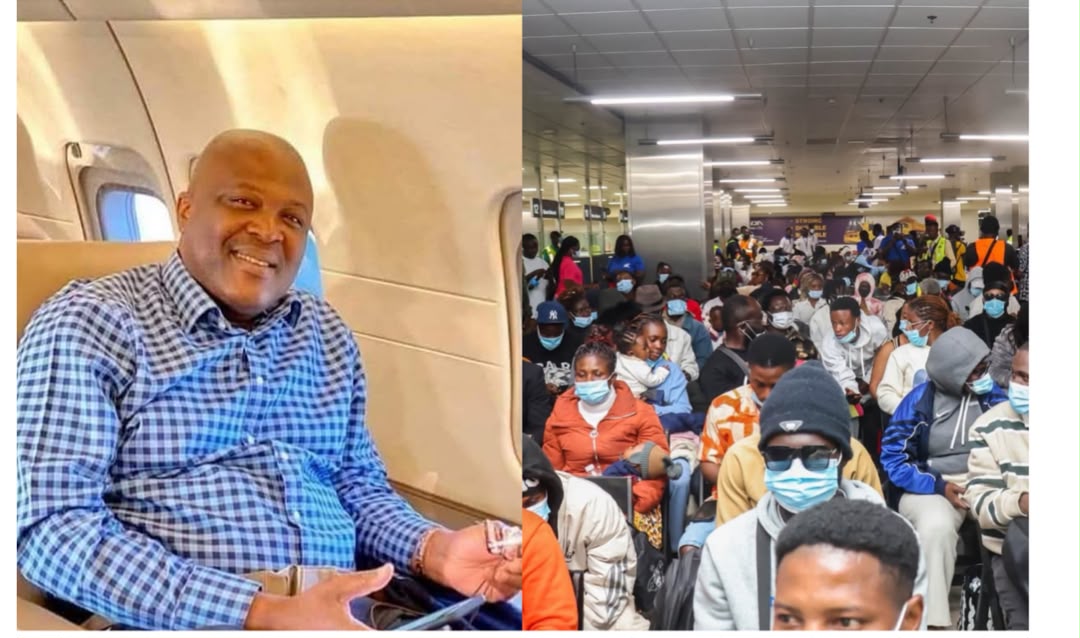
The return of hundreds of Ghanaian nationals fleeing renewed xenophobic attacks in South Africa has placed an urgent spotlight on a critical question facing policymakers: how can returning citizens rebuild their lives after losing years of investment, employment, and stability abroad?
In what many observers describe as one of the most significant private-sector interventions in Ghana’s recent humanitarian response efforts, businessman and mining entrepreneur Ibrahim Mahama has announced the availability of 100 jobs for Ghanaian returnees, offering a pathway to economic recovery for citizens affected by the unrest.
The intervention comes at a time when Ghana is receiving growing numbers of evacuees from South Africa following anti-immigrant demonstrations and violent attacks that have disrupted businesses, displaced families, and forced many foreign nationals to seek safety elsewhere.
For many of the returnees arriving at the Kotoka International Airport, the journey home has been accompanied by uncertainty. Some left behind thriving businesses, while others lost employment, personal belongings and years of hard work during the disturbances.
Against this backdrop, the promise of immediate employment opportunities represents more than just jobs; it symbolizes a chance for affected individuals to regain dignity, financial independence and confidence in their future.
A National Reintegration Challenge
The recent evacuation exercise has become one of the largest coordinated efforts involving Ghanaian nationals living in South Africa in recent years.
Government officials estimate that more than 1,500 Ghanaians expressed interest in returning home amid escalating security concerns. As flights continue to arrive, authorities are increasingly focused not only on bringing citizens home safely but also on ensuring they can successfully reintegrate into Ghanaian society.
While emergency evacuations often attract public attention, experts note that the more difficult task begins after citizens arrive home.
Returnees frequently face challenges including unemployment, housing insecurity, psychological trauma and the loss of business capital accumulated over many years abroad.
Without effective support systems, many risk falling into economic hardship despite having valuable skills, experience and entrepreneurial knowledge.
This reality has pushed government agencies to seek partnerships with private companies capable of absorbing skilled workers and supporting business recovery initiatives.
Private Sector Takes the Lead
The employment package offered through Engineers and Planners Limited, one of Ghana’s largest indigenous mining and construction firms, represents a significant contribution to these efforts.
The jobs are expected to provide immediate opportunities for qualified returnees while helping reduce pressure on government support programmes.
Beyond employment, Ibrahim Mahama’s intervention reflects a broader philosophy that reintegration should focus on restoring long-term economic independence rather than relying solely on short-term relief assistance.
That approach was demonstrated through direct support extended to individuals who suffered substantial losses during the attacks.
By assisting affected citizens to restart economic activities and rebuild their livelihoods, the initiative seeks to create sustainable recovery pathways rather than temporary solutions.
Development analysts argue that such interventions are often more effective because they combine financial support with opportunities for long-term income generation.
Why the South Africa Situation Matters
South Africa remains one of the most important destinations for African migrants seeking employment and business opportunities.
Over the years, thousands of Ghanaians have established businesses, pursued education and secured employment in various sectors of the South African economy.
However, recurring episodes of xenophobic violence have periodically threatened the safety and economic security of foreign nationals.
These incidents often arise from complex socio-economic pressures, including unemployment, inequality and competition for limited economic opportunities.
While South African authorities have repeatedly condemned attacks on foreign nationals, concerns remain among migrant communities about their safety and long-term prospects.
For Ghana, the situation carries broader implications beyond the immediate humanitarian response.
Diaspora communities contribute significantly to national development through remittances, investments and skills transfers. When citizens abroad are forced to abandon businesses and return unexpectedly, the economic impact can extend to families and communities back home that depend on those earnings.
A Test of Ghana’s Economic Resilience
The arrival of hundreds of returnees presents both a challenge and an opportunity for Ghana.
On one hand, the country must mobilize resources to support citizens who may require employment, housing and financial assistance.
On the other hand, many returnees possess valuable entrepreneurial experience, technical expertise and international business exposure that could contribute to national development if properly harnessed.
Economists note that successful reintegration programmes can transform a potential social burden into an economic asset.
Individuals returning from foreign markets often bring knowledge of international trade, customer service standards, manufacturing processes and business management practices.
If supported effectively, these skills can strengthen local industries and stimulate new enterprise creation.
This is why the growing involvement of corporate Ghana has been welcomed by policymakers.
Beyond the employment opportunities already announced, several private-sector organizations have reportedly expressed interest in supporting the reintegration programme through job placements, training opportunities and other forms of assistance.
Building a Model for Future Crises
The collaboration emerging between government and the private sector may ultimately become one of the most important outcomes of the current situation.
Humanitarian crises involving displaced citizens are becoming increasingly complex, requiring responses that extend beyond traditional government interventions.
Public-private partnerships offer a model that combines state coordination with private-sector resources, expertise and employment capacity.
If successfully implemented, Ghana’s response could serve as a framework for managing future emergencies involving citizens affected by conflicts, disasters or economic disruptions abroad.
Such an approach would not only address immediate needs but also strengthen national preparedness for future challenges.
What Happens Next?
As additional evacuation flights continue to arrive, attention is expected to shift toward implementation.
The effectiveness of the reintegration programme will largely depend on how quickly employment opportunities are matched to returnees, how efficiently support services are delivered and whether beneficiaries can achieve long-term economic stability.
For the hundreds already back home, the coming months will be crucial.
Many will be seeking opportunities to rebuild careers, restart businesses and provide for their families after losing livelihoods abroad.
READ ALSO: Economic Growth Without Jobs Widens Inequality, Labour Says
For Ghana, the situation represents a test of national solidarity and economic resilience.
And for those stepping forward to provide assistance, including business leaders and corporate institutions, it is an opportunity to demonstrate how collaborative action can help transform a humanitarian challenge into a story of recovery, resilience and renewed hope.
As the country welcomes more of its citizens home, the success of these efforts could determine not only the future of the returnees but also the strength of Ghana’s response to crises affecting its people wherever they may be in the world.
