
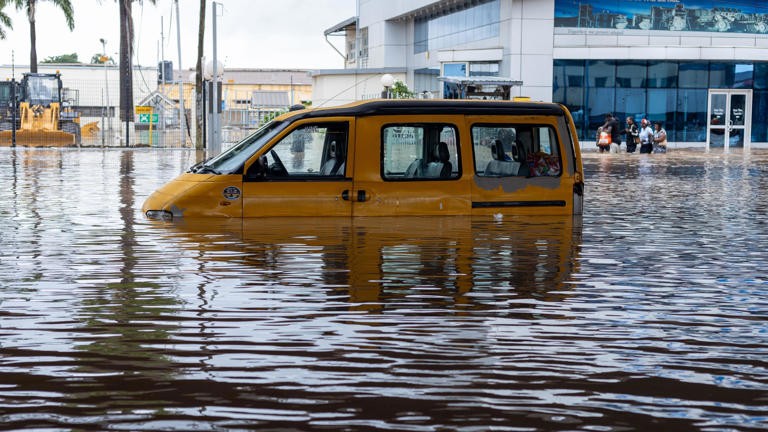
The Ghana WASH Journalists Network (GWJN) has called for urgent and sustained national action to address Accra’s recurring flooding, describing the situation as unacceptable and preventable.
In a statement issued on July 1, 2026, and signed by the National General Secretary, Samuel Asamoah, the Network expressed sorrow over the latest floods that hit Accra and surrounding communities, which claimed lives, destroyed property, and displaced thousands of residents. It extended condolences to bereaved families and sympathised with victims whose livelihoods have been affected.
According to GWJN, the repeated flooding incidents reflect long-standing failures in planning, enforcement, environmental management, and urban governance, despite years of interventions, reports, and emergency responses.
The Network identified key drivers of flooding in Accra, including encroachment on wetlands and waterways, weak land-use planning, poor drainage systems, indiscriminate waste disposal, unregulated urban expansion, and inadequate maintenance of existing drainage infrastructure. It also cited weak coordination among institutions responsible for flood management.
GWJN stressed that flooding should no longer be treated as a seasonal emergency but as a permanent national development issue requiring comprehensive engineering solutions and strict enforcement of planning regulations.
It urged key state institutions, including the Ghana Hydrological Authority (HYDRO), Metropolitan, Municipal and District Assemblies (MMDAs), the Land Use and Spatial Planning Authority (LUSPA), and the Environmental Protection Authority (EPA), to strengthen protection of wetlands and drainage corridors.
The Network further called for mandatory hydrological and drainage assessments for all road projects, insisting that infrastructure must be designed to safely channel storm water into rivers, lagoons, and the sea to prevent community flooding.
GWJN also raised concerns about the status of recommendations made by a government Anti-Flood Taskforce established in March 2025, chaired by Deputy Chief of Staff (Operations), Stanislav Xoese Dogbe. It questioned what progress had been made in implementing its findings and called for transparency and accountability.
The Network urged government to take firm action, including strict enforcement of planning laws, removal of structures obstructing waterways, reclamation of wetlands, and improved engineering standards for public infrastructure projects.
READ ALSO:MTN Ghana Hands Over 3,888 Hospital Beds to Seven Hospitals
While emphasizing government responsibility, GWJN also called on citizens to stop dumping waste into drains and engaging in illegal construction along waterways, noting that public behaviour contributes significantly to flooding.
It added that it will intensify media advocacy on sanitation, drainage protection, and flood prevention, and work with stakeholders to expose violations that worsen the crisis.
GWJN further urged authorities to ensure safe water supply in affected communities and to test and treat contaminated water sources following flood incidents. “The time to act decisively is now,” the statement concluded.
Below is the full statement
