
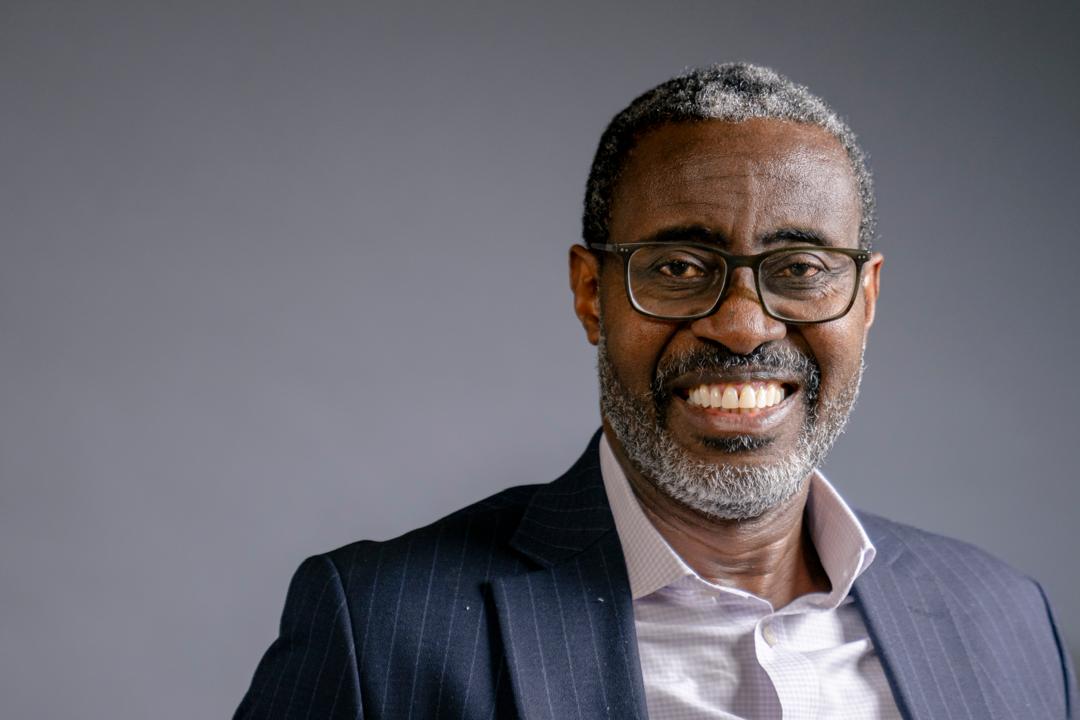
As artificial intelligence rapidly reshapes global economies, legal systems, education, and communication, a leading Ghanaian lawyer has issued a stark reminder: the most decisive factor in the AI era will not be technology itself, but the ethical quality of those who control it.
Speaking at the 2026 commencement ceremony of SOS-Hermann Gmeiner International College, legal practitioner Ace Ankomah delivered a wide-ranging address that blended personal reflection, global technological trends, and a warning about Africa’s place in the unfolding digital transformation.
His central argument was clear: while artificial intelligence may be able to replicate intelligence, it cannot replicate conscience.
A turning point in human history
Addressing graduating students on the theme of ethical leadership in an AI-driven world, Mr. Ankomah described the current moment as one of the most consequential periods in modern history.
He noted that AI systems are already influencing how decisions are made in business, governance, law and communication, with the pace of development accelerating faster than regulatory systems can adapt. But for all its sophistication, he argued, artificial intelligence remains fundamentally limited.
Technology, he said, may amplify human capability, but it cannot generate moral judgement. That responsibility, he stressed, remains entirely human.
Global warnings and rising concern
The lawyer referenced growing concerns among global technology leaders and policymakers about the unchecked expansion of AI systems.
Figures such as Geoffrey Hinton, Bill Gates, Elon Musk, Steve Wozniak and United Nations Secretary-General António Guterres have all previously raised concerns about the risks associated with rapid AI advancement.
He also cited warnings from AI developers themselves, including statements from Anthropic co-founder Jack Clark, who compared the current trajectory of AI development to a vehicle accelerating without a functional braking system.
For Mr. Ankomah, these concerns point to a deeper issue: not whether AI will advance, but whether humanity is prepared to govern it responsibly.
Africa at a crossroads in the AI era
A significant portion of his address focused on Africa’s position in the global technological landscape.
He warned that the continent risks repeating historical patterns in which it has entered major global revolutions late, often as a consumer rather than a creator of systems.
From industrialisation to digital transformation, Africa’s participation has often been shaped by external design rather than internal innovation, he argued.
The AI revolution, he suggested, presents a critical opportunity to break that cycle. For Africa, he said, the question is no longer whether it can adopt technology, but whether it can help define how that technology is built, governed and deployed.
Failure to do so, he cautioned, could deepen existing global inequalities in data ownership, economic power and technological influence.
The moral question behind artificial intelligence
Beyond economics and innovation, Mr. Ankomah framed AI as a moral issue.
He told the graduating class that the central question of the AI era is not technical but ethical: whether technology will expand opportunity or concentrate power, and whether it will serve humanity or exploit it.
These outcomes, he argued, will not be determined by machines, but by the character and judgement of human leaders.
In his words, “those questions will be answered by ethical leaders.”
He warned that AI systems, no matter how advanced, cannot define justice, feel compassion or choose responsibility over convenience.
Discipline, failure and personal transformation
To ground his message, Mr. Ankomah shared insights from his own academic journey at Mfantsipim School, where he experienced a dramatic academic turnaround.
He recounted how early academic struggles eventually gave way to top performance through sustained discipline, repetition and deliberate effort.
His message to students was that success is not a product of talent alone but of consistent practice and resilience.
He emphasized that learning often requires repetition and persistence, noting that mastery is built through effort rather than inspiration.
Education, mentorship and structured growth
The address also highlighted the importance of structured education systems and mentorship.
He contrasted traditional learning environments with modern systems that increasingly involve continuous engagement between educators, parents and students.
Commending SOS-Hermann Gmeiner International College, he described its educational model as intentionally holistic, focusing not only on academic excellence but also on personal development and character formation.
For him, education is not just about knowledge acquisition but about shaping responsible individuals capable of leadership in complex societies.
Five principles for an AI-driven world
Mr. Ankomah outlined five guiding principles for the graduating class: intellectual excellence, moral courage, humility, empathy and service.
He argued that these values are essential for navigating a world increasingly shaped by algorithms, automation and digital decision-making systems. Importantly, he warned against imbalance.
Intelligence without humility, he said, can become dangerous, while efficiency without empathy is incomplete. Similarly, competence without ethics risks creating systems that are powerful but harmful.
Africa, sovereignty and global influence
Another key theme of the speech was technological sovereignty. Mr. Ankomah urged African countries to take a more active role in shaping global AI governance frameworks rather than passively adopting systems designed elsewhere.
He referenced the African philosophy of Ubuntu to emphasize interconnectedness and collective responsibility as contributions Africa can bring to global discussions on technology ethics.
He stressed that participation in global systems is not optional if Africa wants to avoid marginalisation in future technological economies.
In a striking metaphor, he warned that “if you are not at the table, you are on the menu,” highlighting the risks of exclusion from global decision-making spaces.
The future belongs to ethical leaders
Concluding his address, Mr. Ankomah returned to his central message: leadership in the AI era will be defined less by technical ability and more by ethical clarity.
He challenged graduates to become leaders who combine intelligence with conscience and ambition with compassion.
READ ALSO:Funding Crisis Threatens Ghana’s Food Security
History, he said, will not remember grades or academic performance alone, but the kind of leaders individuals become in shaping society.
He ended with a motivational charge urging students to rise above mediocrity and set new standards of excellence, reinforcing his belief that true leadership is defined by character, not circumstance.
As artificial intelligence continues to evolve at unprecedented speed, his message resonates beyond the classroom serving as both a warning and a roadmap for societies grappling with the ethical boundaries of emerging technology.
