
The government has unveiled a US$10 billion economic transformation programme aimed at reducing Ghana’s dependence on imports, expanding local manufacturing and creating jobs through investments in agriculture, energy, mineral processing and other productive sectors.
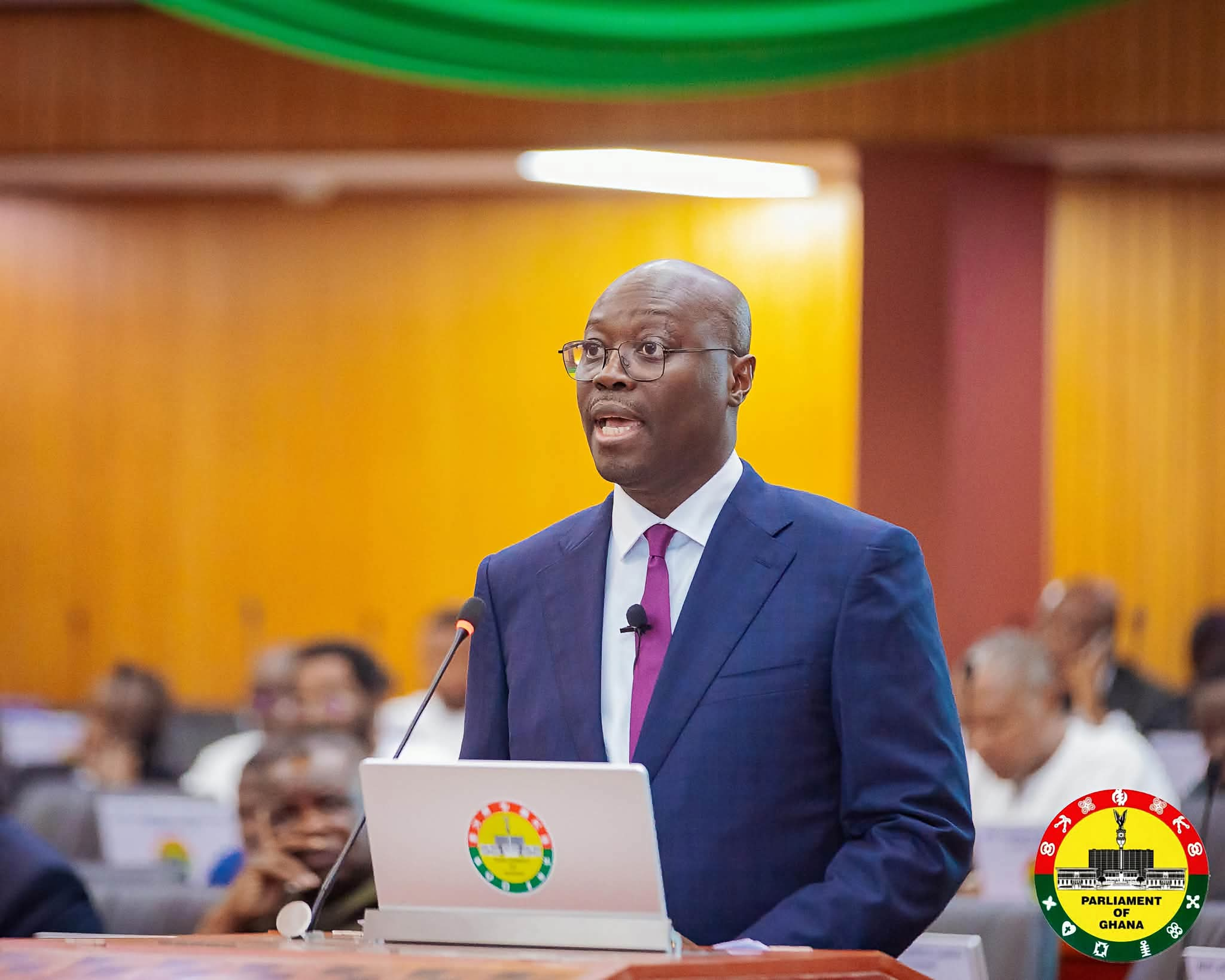
Finance Minister Dr Cassiel Ato Forson announced the four-year initiative while presenting the 2027 Budget Statement and Economic Policy to Parliament on Thursday, November 12, 2026.
Dubbed The New Economy: New Ghana, Jobs and Prosperity, the programme will run from 2027 to 2030, with investments targeting eight strategic areas to strengthen domestic production, promote industrialisation and increase the value Ghana derives from its natural resources.
Under the plan, the private sector is expected to lead investment and job creation, while the government provides infrastructure, financing support and a favourable business environment.
Agriculture Takes Largest Share
Commercial agriculture will receive the largest allocation of US$3 billion to boost food production, reduce imports and supply raw materials to local industries.
The investment will target eight agricultural value chains, including rice, sugar, poultry, maize and soya feed, aquaculture, oil palm, vegetables and cocoa processing.
As part of the initiative, the government intends to bring an additional 100,000 hectares under rice cultivation, creating an estimated 125,000 jobs.
Rice production hubs will be developed in the Afram Plains, Volta Basin, Western Ghana and Northern Ghana.
The government also plans to prohibit commercial rice imports by 2030, with import licences from 2027 linked to purchases from verified local farmers and millers.
In the oil palm sector, 100,000 hectares will be developed across five regions, supported by a US$500 million financing facility expected to create more than 250,000 jobs.
The programme further includes a US$1 billion investment in the Pwalugu Multi-purpose Dam to irrigate more than 25,000 hectares for vegetable production, support aquaculture and generate 70 megawatts of hydropower.
For cocoa, Ghana aims to process at least 50 per cent of its production locally by 2028 and achieve full local processing by 2030.
$2.2bn Earmarked for Energy Infrastructure
The government will invest US$2.2 billion in energy infrastructure to expand electricity generation, improve reliability and reduce production costs for industries.
The programme includes a 1,450-megawatt state-owned thermal power plant at Kafodzidzi-Abrobeano in the Central Region, with construction expected to begin in December 2026.
The first 600 megawatts are scheduled for completion by December 2028, while the remaining 850 megawatts are expected by December 2030.
A separate 600-megawatt solar power plant, supported by 2,000 megawatt-hours of battery storage, will also be developed.
The government intends to reduce electricity generation costs from approximately 16 US cents per kilowatt-hour to 8 US cents or less and phase out emergency power plants by 2030.
Another US$500 million will support transmission network upgrades, while two million prepaid meters will be deployed to reduce distribution losses.
The programme also provides US$200 million for nuclear energy readiness between 2027 and 2028, including training for more than 2,000 scientists.
Ghana Moves to Process Minerals Locally
Under the fourth pillar, US$1.5 billion will be invested in processing critical minerals, including gold, manganese, bauxite and lithium.
The government plans to ensure that at least 70 per cent of artisanal and small-scale gold is refined locally by December 2027, increasing to 100 per cent by December 2028.
Exports of raw small-scale gold are expected to be prohibited by the end of 2028.
For manganese and bauxite, the government is targeting at least 50 per cent local processing by 2028 and full processing by 2030.
The initiative will also support lithium refining, battery-grade chemical production and the development of battery components.
A 24-hour critical minerals processing enclave will be established in the Western Region, alongside a railway connecting Takoradi, Nsuta, Awaso and Nyinahin.
The railway is expected to extend to Hamile in the Upper West Region from 2030 to facilitate trade with neighbouring Sahelian countries.
Tourism and Creative Arts Receive $1bn
The tourism, culture and creative arts sector will receive US$1 billion to position Ghana as a major destination for heritage tourism, international conferences, cultural activities and medical tourism.
The government plans to expand the Black Star Experience beyond December festivities through year-round tourism activities.
The initiative includes preserving historical forts and castles, developing museums and cultural facilities, and promoting ancestry and heritage tourism.
SSNIT is expected to construct an international convention centre at the La Trade Fair Centre.
The government will also provide tax incentives for five hotels by 2030, including two five-star facilities in Accra and Kumasi and three four-star hotels in other designated tourism destinations.
A new National Theatre will be completed in Kumasi, while a Ghana Medical Tourism Hub will be developed to attract international patients.
Textile Industry Set for Revival
Another US$1 billion has been allocated to revive Ghana’s textile and garment industry through factory modernisation, industrial enclaves and expanded manufacturing capacity.
The programme will support local designers, tailors, dressmakers and garment manufacturers with equipment, technical assistance and commercial partnerships.
The government also intends to amend public procurement laws to require public institutions to purchase uniforms, hospital textiles, bedding and protective clothing from Ghanaian manufacturers.
Implementation will begin in 2027, with upgraded production facilities expected to become operational in 2028.
The initiative seeks to increase exports and create employment opportunities, particularly for women and young people.
Pharmaceutical Manufacturing to Expand
The government will invest US$1 billion in pharmaceutical and biomanufacturing hubs in the Eastern and Central Regions to reduce dependence on imported medicines.
Ghana currently imports between 70 and 75 per cent of its medicine requirements at an estimated annual cost of US$500 million.
Under the programme, construction of the pharmaceutical hubs is expected to begin in 2027.
The government aims to manufacture between 60 and 80 per cent of essential medicines locally by 2030.
The initiative is projected to create approximately 20,000 direct and indirect jobs while strengthening Ghana’s capacity to export pharmaceutical products across West Africa.
$300m for Technology and Artificial Intelligence
The technology sector will receive US$300 million between 2027 and 2028 to strengthen digital infrastructure, artificial intelligence and technology-driven employment.
A National Artificial Intelligence Centre will be established to support research, innovation, professional training and technology start-ups.
The centre will promote AI applications in agriculture, healthcare, energy, mining, logistics, Ghanaian languages and public services.
The government also plans to upgrade rural 2G networks to reliable 4G connectivity, improving access to digital learning, telehealth, electronic payments and online markets.
Young people will receive training in software development, data analytics, artificial intelligence, computer networking and digital business services.
Small and medium-sized enterprises will also receive support to adopt digital technologies.
Economic Stability and Private Sector Growth
Beyond sector-specific investments, the government intends to strengthen macroeconomic stability and improve access to affordable financing.
Its targets include maintaining single-digit inflation, reducing public debt to approximately 45 per cent of GDP and achieving economic growth of about 8 per cent by 2030.
The government is also targeting unemployment below 8 per cent and progress towards an investment-grade sovereign credit rating.
To support businesses, it plans to strengthen bank lending, develop the corporate bond market and expand financing through institutions such as the Development Bank Ghana and Ghana EXIM Bank.
Credit guarantees, equipment leasing and export financing will also be introduced to support farmers, manufacturers and businesses.
An allocation of GH¢30 billion has been planned for the New Economy programme in 2027 as part of the broader US$10 billion commitment.
The programme will be financed partly through fiscal measures, including a one-percentage-point reduction in the primary surplus target over the implementation period and additional revenue measures expected to generate 0.5 per cent of GDP.
Dr Forson said the success of the initiative would ultimately be measured by jobs created, improvements in household incomes and the value Ghana retains from its natural and human resources.
He urged Parliament and Ghanaians to support the programme, describing Ghana’s 70th independence anniversary in 2027 as an opportunity to transform the structure of the economy and establish a stronger foundation for sustainable growth.
Source: Isaac Kofi Dzokpo/capitalnewsonline.com
