
World Child Cancer is seeking to raise GH¢11.6 million to strengthen diagnosis, treatment and supportive care for children battling cancer in Ghana as the organisation steps up efforts to improve survival outcomes.
The Sub-Saharan Africa Regional Finance Manager of World Child Cancer, Mr Saviour Senanu Bruce, disclosed the fundraising target at the organisation’s NTOBOA FAIR initiative in Accra.
He said although the GH¢11.6 million target appeared substantial, it remained modest considering the high cost of childhood cancer treatment and the number of children requiring support.
“Our fundraising target is GH¢11.6 million. Although this may appear to be a substantial amount, it is modest when measured against the cost of childhood cancer care and the number of children who need support,” he said.
Mr Bruce said the organisation intends to mobilise the funds through corporate partnerships, individual donations, fundraising activities and public appeals.
He said the resources would be channelled into clinical care, supportive services for affected families, capacity building for healthcare professionals and improvements in medical equipment and other resources required for childhood cancer care.
70% to Go Into Diagnosis and Treatment
Giving a breakdown of how the funds would be used, Mr Bruce said 70 per cent, representing GH¢8.12 million, would be committed directly to clinical care, particularly diagnosis and treatment.
Another 20 per cent, equivalent to GH¢2.32 million, would support capacity building and improvements in resources required to deliver childhood cancer care.
This would include training doctors, nurses, pharmacists, pathologists and other healthcare professionals involved in the diagnosis and treatment of childhood cancers.
Part of the allocation would also go towards the procurement of new medical equipment, refurbishment of existing equipment and provision of essential medical consumables.
The remaining 10 per cent, representing GH¢1.16 million, would be dedicated to supportive care for children undergoing treatment and their caregivers.
Mr Bruce said the allocation was designed to address both the immediate medical needs of children and some of the wider challenges families face throughout the treatment process.
Treatment Costs Remain Major Challenge
Mr Bruce identified the high cost of treatment as one of the major challenges confronting families with children diagnosed with cancer.
He explained that the amount required to treat a child depended on several factors, including the type of cancer, the stage at which it was detected and how quickly treatment commenced.
Citing the case of a child diagnosed with a brain tumour, he said the estimated cost of care could reach about GH¢162,140.
He cautioned, however, that the figure was only an estimate and that actual expenditure could be two or three times higher in some cases.
According to him, the financial burden begins at the diagnostic stage, where patients may require laboratory investigations, MRI and CT scans and other tests to determine the nature and extent of the disease.
Families subsequently have to bear additional costs associated with surgery, medication and specialised medical consumables during treatment. Mr Bruce said the cost of childhood cancer care also extended beyond medical procedures.
Children undergoing treatment require adequate nutrition, while caregivers may need financial assistance for accommodation and transportation, particularly when they have to travel long distances and remain close to treatment centres for extended periods.
Caregivers may also require communication support to stay connected with relatives at home, while both children and their families often have to cope with the psychological impact of a cancer diagnosis.
“This is just one case. It shows why our GH¢11.6 million fundraising target is modest compared with the scale of the need,” Mr Bruce said.
World Child Cancer Pledges Accountability
Mr Bruce assured individuals and organisations considering supporting the initiative that World Child Cancer would maintain transparency and accountability in the management of the funds.
He said contributions made for specific purposes would be applied to those areas to ensure donors received value for their support.
“As we mobilise these resources, we must ensure that every donation delivers value for money. Funds donated for a particular purpose must be invested in the activities for which they were intended,” he said.
He added that the organisation had over the years supported childhood cancer care through the training of healthcare professionals, assistance with diagnosis and treatment, supportive care and scholarships.
It had also supported the provision of infrastructure, medical equipment and consumables to strengthen the capacity of health facilities treating children with cancer.
“As an organisation, we account for every pesewa we receive. We do this accurately and diligently, ensuring transparency in everything we do,” Mr Bruce said.
Survival Gap
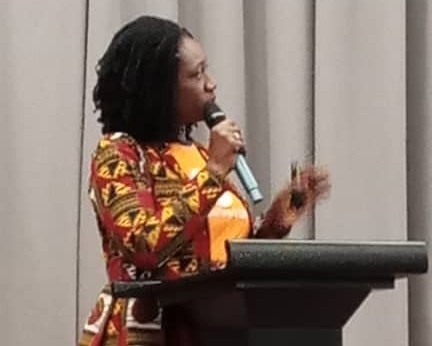
Country Coordinator of World Child Cancer, Ms Adwoa Penaman Boateng Desu, meanwhile, called for stronger local support to improve childhood cancer survival rates in Ghana.
She expressed concern about the wide disparity in survival outcomes between children diagnosed with cancer in Ghana and their counterparts in high-income countries.
According to her, while eight to nine out of every 10 children diagnosed with cancer survive in high-income countries, fewer than five out of 10 survive in Ghana and similar settings.
She said the disparity underscored the need for greater investment in early diagnosis, appropriate treatment and supportive care, as well as measures to reduce the financial and logistical difficulties confronting affected families.
Ms Boateng Desu stressed that many childhood cancers could be cured when detected early and treated appropriately.
She said improving early detection and ensuring that children were able to access and complete treatment were therefore critical to increasing survival rates.
She maintained that a child’s chance of surviving cancer should not be determined by the country or economic circumstances into which the child was born.
NTOBOA FAIR Promotes Local Ownership
Ms Boateng Desu explained that the NTOBOA FAIR draws inspiration from the Ghanaian tradition of pooling resources to support a common cause.
She said the initiative was intended to encourage stronger local participation and ownership of childhood cancer care rather than relying predominantly on international assistance.
According to her, addressing childhood cancer could not be left solely to hospitals, healthcare professionals, government and international development partners.
Individuals, communities, businesses and corporate organisations, she said, also had an important role to play in improving access to treatment. She therefore called for support through funding, technical expertise, advocacy, medical equipment and supplies.
Ms Boateng Desu noted that Ghana had made progress in childhood cancer care through international partnerships and sustained interventions over the years.
She said those interventions had contributed to improvements in survival rates, enhanced training for healthcare professionals and the expansion of shared-care centres, bringing some services closer to affected children and their families.
She, however, cautioned that sustaining the progress and extending treatment to more children would require stronger domestic support and long-term commitment.
Ms Boateng Desu said greater local ownership would help build a more sustainable childhood cancer care system and give more affected children an opportunity to complete treatment, return to school and pursue their ambitions.
Mr Bruce consequently appealed to individuals, businesses and corporate organisations to support the GH¢11.6 million target.
“Your donation is an investment in a child’s life and future. Its return is the opportunity for that child to receive treatment, recover and look forward to a brighter tomorrow,” he said.
