
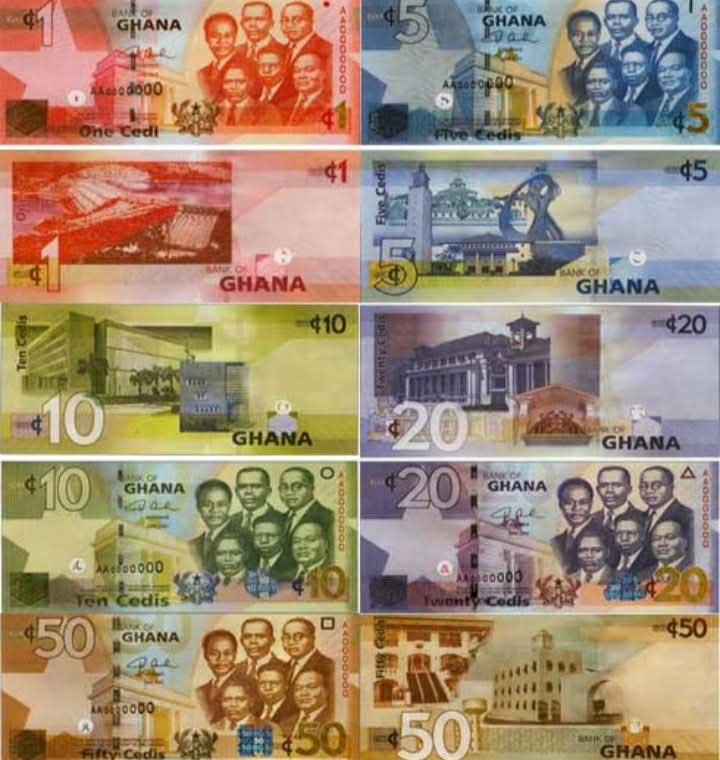
The Bank of Ghana (BoG) has issued a stern warning against the deliberate mutilation, defacement and illegal repair of Ghanaian cedi notes, directing members of the public to surrender damaged currency to commercial banks for examination and possible replacement.
The Central Bank cautioned that individuals who tamper with, alter or deliberately damage banknotes risk prosecution, with convicted offenders facing fines of up to 750 penalty units, imprisonment for up to three years, or both.
In a statement, the BoG expressed concern over the practice of taping, gluing and rejoining torn banknotes before returning them to circulation, warning that such activities threaten the integrity of the national currency and disrupt banking operations.
It explained that improperly repaired banknotes could damage Automated Teller Machines (ATMs), interfere with financial transactions and cause breakdowns in high-speed currency processing equipment used by financial institutions.
The Central Bank consequently urged individuals and businesses to desist from attempting to repair damaged currency and instead present such notes to commercial banks for proper assessment and replacement in accordance with established procedures.
The BoG further reminded the public that the deliberate destruction, alteration or defacement of Ghanaian currency constitutes an offence under the Bank of Ghana Act, 2002 (Act 612), and the Currency Act, 1964 (Act 242).
It warned that individuals found engaging in unlawful currency mutilation or related activities could face criminal prosecution.
The Central Bank also encouraged the public to report individuals involved in illegal banknote repairs or deliberate currency destruction to the appropriate security agencies.
Beyond the legal implications, the BoG raised concerns about the financial burden associated with replacing damaged and prematurely worn-out banknotes.
According to the Bank, the continuous replacement of mutilated currency imposes substantial administrative and operational costs on the state, placing additional pressure on public resources.
It noted that printing new banknotes, particularly lower denominations, and withdrawing damaged currency from circulation required significant expenditure that could otherwise support national development priorities.
The Bank stressed that improper handling of the cedi not only shortened the lifespan of banknotes but also increased the frequency and cost of currency replacement.
It therefore called on Ghanaians to adopt responsible currency-handling practices to minimise unnecessary damage and preserve the quality of banknotes in circulation.
The BoG reaffirmed the importance of protecting the integrity and durability of the Ghanaian cedi, describing the national currency as an important symbol of the country’s economic identity.
It urged the public to cooperate with commercial banks and relevant authorities to ensure that damaged notes were removed from circulation through approved channels rather than illegally repaired and reused.
Source: Isaac Kofi Dzokpo
