
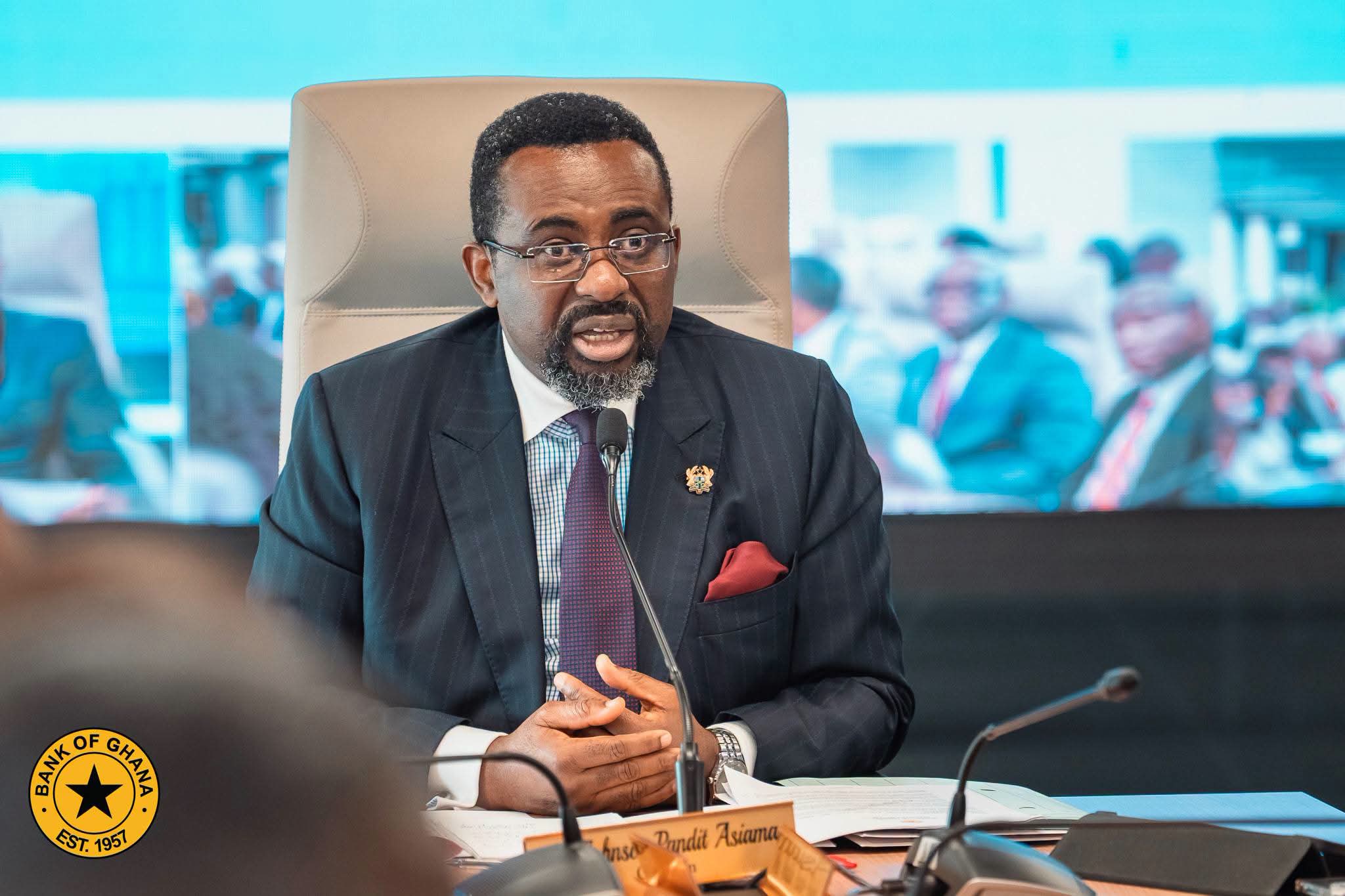
The Bank of Ghana (BoG) is forecasting economic growth of around 6 percent in the second half of 2026, supported by coordinated fiscal and monetary measures, structural reforms and gains from Ghana’s IMF-supported programme.
Governor of the Bank of Ghana, Dr Johnson Asiama, said the country’s economic recovery is becoming firmly entrenched, with stronger economic activity, improved external buffers and relative stability of the cedi pointing to sustained expansion.
“Looking ahead, we expect growth of around 6 percent in the second half of the year, as this recovery matures,” Dr Asiama said at the Fidelity Bank Debt Capital Markets Conference 2026.
Growth Momentum Strengthens
Dr Asiama said economic growth had strengthened significantly, rising from 2.8 percent in 2023 to about 6 percent in 2025, driven by services, agriculture, mining and a broader industrial rebound.
The momentum continued into 2026, with the economy recording growth of 6.4 percent in the first quarter, compared with 6.2 percent during the corresponding period in 2025.
Gold, Cocoa Drive $8.8bn Trade Surplus
The Governor said Ghana’s economic outlook was further supported by a stronger external position, driven largely by receipts from gold and cocoa exports.
“Strong gold and cocoa receipts have delivered a trade surplus of about $8.8 billion in the first half of this year,” he said.
Gross international reserves stood at US$12.9 billion at the end of June 2026, equivalent to about five months of import cover and providing the economy with greater resilience against external shocks.
Cedi Stability Anchors Confidence
Dr Asiama identified the relative stability of the cedi as another key pillar of the economic recovery.
According to him, the cedi appreciated by 40.7 percent against the US dollar in 2025 after depreciating by nearly 20 percent in 2024 and has remained broadly stable in 2026.
“The cedi, which had appreciated last year by 40.7 percent after losing nearly 20 percent in its value in 2024, has held broadly stable into this year, easing imported inflation and reinforcing confidence,” he said.
He said the currency’s stability was helping to reduce imported inflation, ease costs for businesses and households, and strengthen investor confidence.
Fiscal Consolidation Key
“Fiscal consolidation has been a key pillar of Ghana’s economic recovery,” Dr Asiama said, pointing to stronger revenue mobilisation, prudent expenditure management and efforts to restore debt sustainability.
He said Ghana had moved beyond the initial recovery from the 2022/2023 economic crisis into a period of sustained expansion.
According to the Governor, continued macroeconomic stability, stronger exports, fiscal discipline and currency stability are expected to support economic growth through the end of 2026.
