
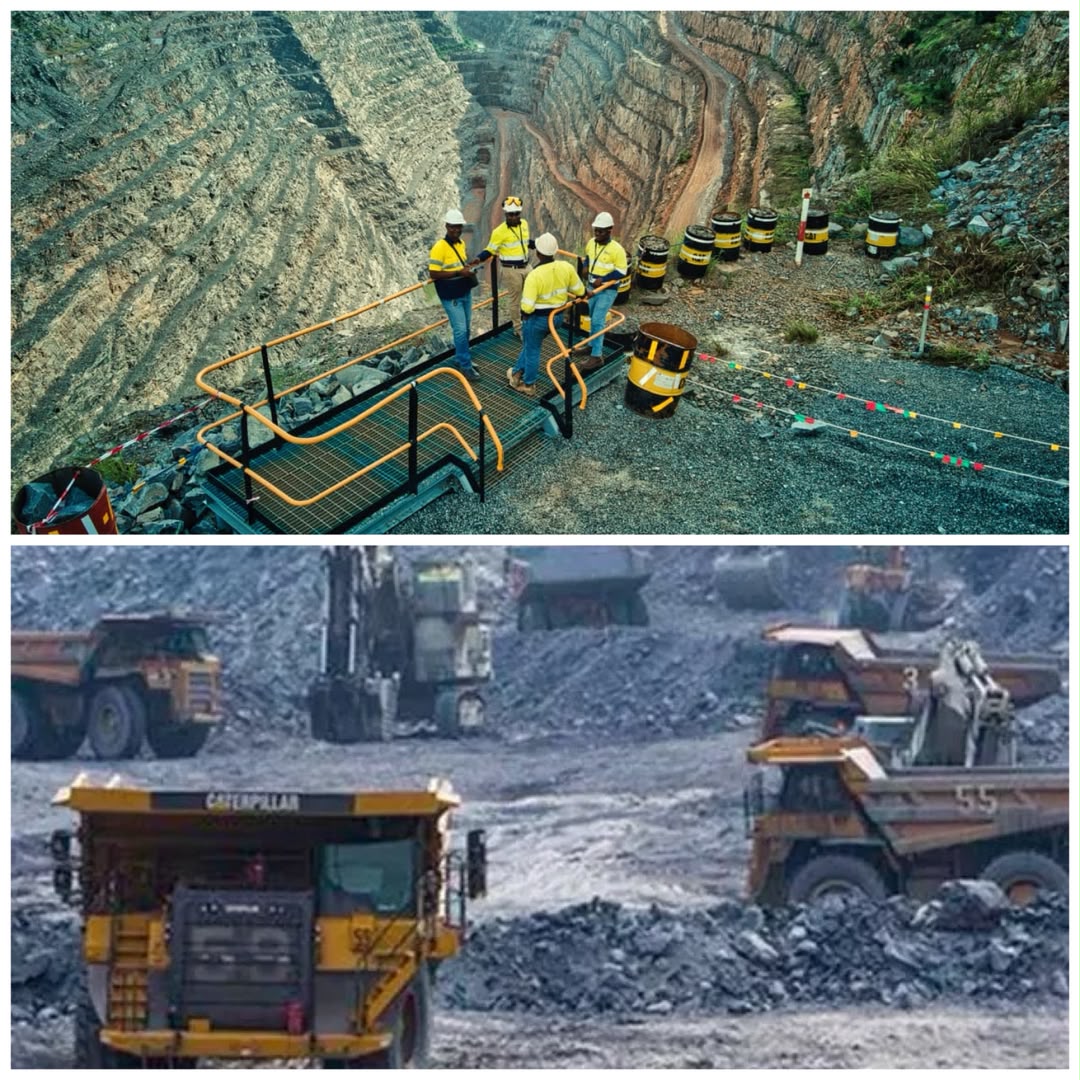
Ghana has built the technical expertise to run world-class mines, but industry players say the huge cost of mine development and limited access to long-term financing continue to prevent indigenous companies from taking a bigger ownership stake in the country’s mineral wealth.
Ghana’s ambition to deepen local ownership of its mining industry is confronting a major obstacle that local content regulations alone may not be able to overcome: access to capital.
After decades of commercial mining, Ghana has developed a pool of highly skilled geologists, engineers, lawyers, accountants, mine managers and other professionals capable of operating sophisticated mining projects. Ghanaian businesses have also expanded their participation in supplying goods and services to the industry.
Yet ownership of major producing mines remains heavily tilted towards multinational companies with the financial capacity to raise hundreds of millions of dollars for exploration, mine development and expansion.
Industry stakeholders say closing that financing gap must become the next frontier of Ghana’s local content agenda if the country wants to move beyond supplying and managing mines to owning a greater share of them.
The issue featured prominently during a panel discussion on local content and community participation at the National Mining Dialogue 2026 in Accra on Tuesday, where legal experts, traditional authorities and industry players examined how Ghana could retain more economic value from its mineral resources.
Their argument was that Ghana has made considerable progress in developing human capital, but indigenous businesses continue to face financial barriers that make it difficult to compete directly with multinational mining companies for major concessions and projects.
Expertise Is No Longer the Main Problem
Legal practitioner Bobby Benson told participants that the shortage of technical expertise could no longer be considered the principal reason Ghanaian companies were not playing a bigger ownership role in the industry.
Ghanaians, he noted, already occupy senior technical and managerial positions within multinational mining companies and have demonstrated their ability to manage complex mining operations.
The bigger problem is raising the enormous amount of capital required to transform a mineral discovery into a commercially producing mine.
Modern mining is capital intensive. Before a company earns revenue from a concession, it may have to finance exploration, feasibility studies, environmental assessments, regulatory approvals, land access, equipment, processing facilities, roads, power systems and other supporting infrastructure.
According to Mr Benson, some mine development and life-of-mine expansion projects can require upfront investment of about US$600 million. That level of financing is beyond the balance sheets of many Ghanaian entrepreneurs and companies.
It can also be difficult for domestic commercial banks to provide hundreds of millions of dollars in long-term financing to a single mining project, particularly considering the risks associated with exploration, commodity prices and the long periods required before some projects begin generating returns.
Multinational mining companies, by contrast, can often draw on larger balance sheets, international banking relationships and global capital markets.
That financing advantage can ultimately determine who controls mining assets even where the technical expertise required to operate them is available locally.
Local Content Must Move Towards Ownership
The financing challenge raises a broader question about the future of Ghana’s local content strategy.
Local content policies have traditionally sought to increase Ghanaian participation through employment, procurement, skills development and the provision of goods and services to mining companies.
Those measures can retain more mining expenditure within the domestic economy and create opportunities for Ghanaian businesses.
However, stakeholders at the dialogue argued that Ghana must increasingly consider ownership if it wants to capture a larger proportion of the long-term value generated by its mineral resources.
A Ghanaian company supplying equipment, transport or professional services to a mine participates in the mining economy, but its economic position is fundamentally different from that of a company holding an ownership interest in the mine itself.
Greater indigenous ownership could allow more profits, dividends, management expertise and investment decisions to remain connected to the domestic economy.
Achieving that objective, however, would require financing solutions capable of matching the scale and duration of mining investments.
This could potentially involve developing specialised mining finance instruments, improving access to international capital markets and creating structures through which institutional capital can participate in commercially viable mineral projects.
Any such arrangement would also have to balance the objective of increasing Ghanaian ownership with the need to protect public funds and ensure that investment decisions remain commercially sound.
Communities Want a Seat at the Table
The debate over local participation is not limited to ownership by Ghanaian businesses.
Traditional authorities are also demanding a stronger role for communities that host mining operations.
Dr Nana Adarkwa Bediako III, Gyasehene of the Apinto Divisional Council, argued that mining communities are too often brought into discussions after critical decisions surrounding mineral leases have already been taken.
This creates tension because those communities directly experience many of the consequences associated with mining, including changes in land use and the social and environmental pressures that can accompany large-scale extraction.
Dr Bediako therefore called for a more permanent three-way decision-making arrangement involving government, mining companies and host communities.
Such an approach would give communities a stronger voice in decisions that directly affect their land, livelihoods and long-term development.
The call also reflects a wider concern about what happens to mining communities when mineral deposits are depleted and companies eventually close their operations.
What Happens When the Mine Closes?
Mining can create employment, business opportunities, infrastructure and government revenue while operations continue. But mineral resources are finite.
Once commercially viable deposits are exhausted, production eventually declines and mines close. Communities that have built their local economies heavily around mining can consequently face serious economic challenges.
Traditional leaders therefore want mining policy to place greater emphasis on creating economic assets that survive beyond the lifespan of individual mines.
That could mean using the mining period to develop skills, local enterprises, infrastructure and alternative economic activities capable of generating employment after extraction ends.
For host communities, the measure of successful mining would therefore extend beyond royalties, compensation and short-term employment to the economic structures left behind.
Financing Could Define Ghana’s Next Mining Era
The discussion comes as Ghana seeks to extract greater domestic value from its position as a major gold-producing country.
The country’s ability to increase mineral production alone does not automatically guarantee maximum domestic economic benefit.
Who owns mining assets, who finances projects, which companies receive major contracts, where profits are retained and how mining communities participate in decisions all influence how mineral wealth translates into national development.
This makes the financing constraint facing indigenous companies particularly important.
If Ghanaian businesses possess the technical capabilities to operate mines but cannot raise the capital necessary to acquire and develop concessions, foreign companies with access to deeper financial markets will continue to enjoy a decisive advantage.
Addressing that imbalance could require Ghana’s mining policy to evolve from a narrow emphasis on local procurement towards a broader strategy covering capital formation, ownership, technology transfer and community participation.
At the same time, financing mining projects carries substantial risks. Exploration does not always lead to commercially viable discoveries, commodity prices fluctuate and large projects can take years to generate returns.
Any attempt to mobilise domestic or state-backed capital for indigenous mining companies would therefore require strong corporate governance, rigorous project assessment and transparent risk management.
The Bigger Question
Ghana’s mining debate is increasingly shifting from whether citizens can work in the industry to whether Ghanaian companies can own a meaningful share of the assets producing the country’s mineral wealth.
The expertise appears to be available. The larger challenge is creating financial structures capable of putting that expertise behind Ghanaian-owned mining businesses.
For host communities, the debate goes even further: mineral extraction must produce development that remains visible after the last ounce of gold or other mineral leaves the ground.
The outcome could determine whether Ghana’s next phase of mining is defined primarily by increased production or by deeper domestic ownership, stronger local businesses and communities capable of sustaining themselves long after individual mines close.
Source: Isaac Kofi Dzokpo/capitalnewsonline.com
