Close Menu
    What's Hot

    Ghana Sets Conditions for Mining Estimated 3 Trillion Ounces of Gold

    Ghana Stocks Rally as Cedi, Fixed-Income Market Falter

    How Can Nuclear Science Help Keep Ghana’s Hospitals Sterile?

    Facebook X (Twitter) Instagram
    CapitalNewsOnline
    • Home
      • News
      • Auto
      • Aviation
      • Banking
      • Digitalisation
      • Economy
      • Finance
      • Tech/AI
      • Telecom
      • About US
      • Contact Us
      • Privacy & Policy
    • News
    • Economy
    • Tech/AI
    • Telecom
    • Finance
    • Digitalisation
    • Auto
    • Banking
    • Aviation
    Monday, September 21
    News flash
    • Ghana Sets Conditions for Mining Estimated 3 Trillion Ounces of Gold
    • Ghana Stocks Rally as Cedi, Fixed-Income Market Falter
    • How Can Nuclear Science Help Keep Ghana’s Hospitals Sterile?
    • Mineral Royalties Projected to Hit GH¢9bn in 2026 — MIIF
    • Government Unveils GH¢598m Power Project for 206 Volta Communities
    • Fuel Price Hike Looms as NPA Raises Petrol, Diesel Price Floors
    • How and Why Ghana’s Gold for Oil and Gold for Reserves Programmes Started — Bawumia Explains
    • Ghana’s Public Debt Rises by GH¢78.41 Billion in First Half of 2026 to Hit GH¢719.52 Billion
    CapitalNewsOnline
    Home » 90% of GH¢1.7bn Gold Loss is Book Entry, Not Cash – IEA
    Finance

    90% of GH¢1.7bn Gold Loss is Book Entry, Not Cash – IEA

    Editorial StaffBy Editorial StaffAugust 27, 2026No Comments3 Mins Read
    Share Facebook Twitter Pinterest Telegram LinkedIn Tumblr Email Copy Link
    Follow Us
    Google News Flipboard
    Share
    Facebook Twitter LinkedIn Pinterest Email Copy Link

    The Institute of Economic Affairs (IEA) says about 90 percent of the reported GH¢1.7 billion loss under the Bank of Ghana’s Domestic Gold Purchase Programme (BGPP) is attributable to exchange-rate valuation differences rather than an actual cash loss.

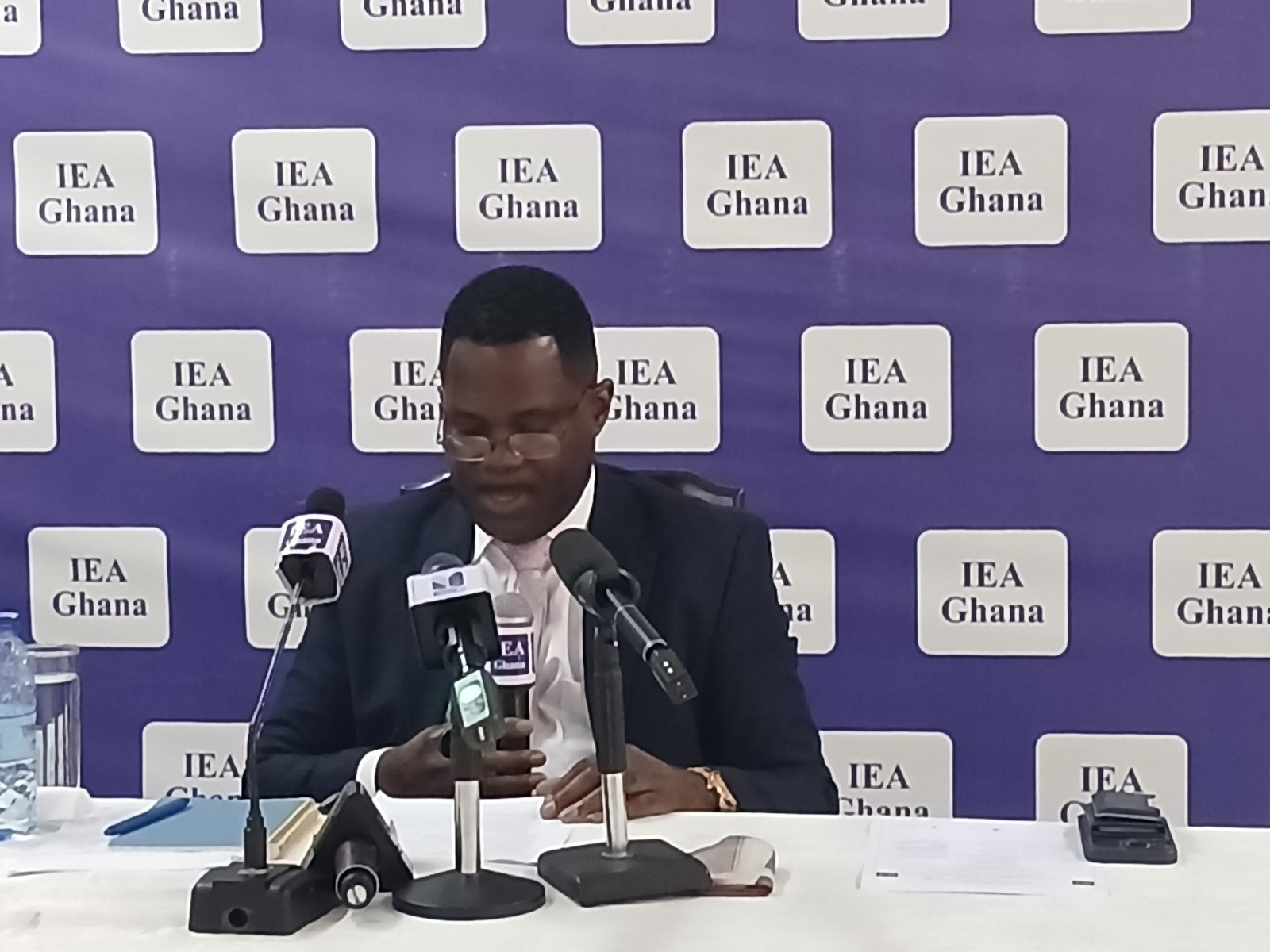
    Director of Research at the IEA, Professor Alexander Bilson Darku, said the reported figure must be properly disaggregated before conclusions are drawn about the performance of the Ghana Gold Board (GoldBod).

    “The reported GH¢1.7 billion comprises service fees, assaying fees and foreign-exchange valuation differences,” he said.

    Prof. Darku was speaking at the IEA’s assessment of the 2026 Mid-Year Budget Review, held on the theme, “From Stabilisation to Transformation.”

    BoG Loss, GoldBod Revenue

    Prof. Darku rejected the classification of service and assaying fees as losses, arguing that they represent payments made by the Bank of Ghana to GoldBod for services rendered and therefore constitute revenue to GoldBod.

    “I don’t understand why somebody would call revenue as a loss,” he said.

    He explained that GoldBod purchases gold on behalf of the Bank of Ghana, with export proceeds received in dollars and converted into cedis using the central bank’s reference exchange rate.

    According to him, fluctuations in the exchange rate between the purchase and valuation dates create accounting differences that are recorded as losses in the Bank of Ghana’s books.

    “It is merely a book accounting issue, and not a significant loss to the nation,” he stressed.

    Prof. Darku further argued that, at the consolidated government level, what is recorded as a loss to the Bank of Ghana could represent a corresponding gain to GoldBod since both are public institutions.

    “To the Government, its monetary authority has made that loss. To the Government, its Gold Board has made that gain,” he said.

    IEA Credits GoldBod for Cedi Stability

    The IEA also credited GoldBod with helping to increase gold exports, foreign-exchange inflows and international reserves, which it said had contributed to the appreciation and relative stability of the cedi.

    Prof. Darku said a stronger cedi reduces import costs, helps ease inflationary pressures, supports lower interest rates and reduces the cedi value of Ghana’s foreign-denominated debt.

    New Financing Model Needs Scrutiny

    Despite challenging the characterisation of the GH¢1.7 billion as a loss, Prof. Darku said GoldBod’s transition from Bank of Ghana financing to private-sector funding requires transparency, prudent management and strong oversight.

    He said the new financing arrangement should also be structured to contribute to the development and deepening of Ghana’s capital markets.

    Prof. Darku further urged GoldBod to evolve beyond being primarily a gold trader into a strategic asset manager.

    IEA Warns Against Over-Reliance on Gold

    The IEA cautioned the government against excessive dependence on gold to maintain foreign-exchange stability, calling for greater economic diversification through export promotion, increased domestic production and stronger Ghanaian ownership of productive assets.

    “The IEA thinks Government has done well to achieve reasonable macroeconomic stability. The question is whether we have the courage to consolidate those gains into lasting economic transformation,” Prof. Darku said.

    He also called for economic growth that generates jobs, stronger enforcement by the Fiscal Council and lower lending rates for businesses as monetary policy conditions ease.


    “The debate should move beyond accounting entries to how Ghana uses its gold wealth and stability to build a diversified, productive economy,” Prof. Darku added.

    Source: capitalnewsonline.com

    2026 Mid-Year Budget Review Alexander Bilson Darku Bank of Ghana BGPP Cedi Stability Domestic Gold Purchase Programme Economic Transformation Exchange Rate Valuation fiscal policy Foreign Exchange Foreign Exchange Reserves Ghana economy Ghana Gold Board Ghana News Gold Exports Gold Loss Gold Trading GoldBod IEA Ghana Institute of Economic Affairs
    Follow on Google News Follow on Flipboard
    Share. Facebook Twitter Pinterest LinkedIn Tumblr Email Copy Link
    Previous ArticleBoG Pushes Quality Data, AI to Strengthen Economic Policymaking
    Next Article Ghana’s Public Debt Rises by GH¢78.41 Billion in First Half of 2026 to Hit GH¢719.52 Billion
    Editorial Staff

    Related Posts

    Ghana Stocks Rally as Cedi, Fixed-Income Market Falter

    September 14, 2026

    How and Why Ghana’s Gold for Oil and Gold for Reserves Programmes Started — Bawumia Explains

    August 31, 2026

    Ghana’s Public Debt Rises by GH¢78.41 Billion in First Half of 2026 to Hit GH¢719.52 Billion

    August 31, 2026
    Advertisement
    Demo
    Latest Posts

    Ghana Sets Conditions for Mining Estimated 3 Trillion Ounces of Gold

    Ghana Stocks Rally as Cedi, Fixed-Income Market Falter

    How Can Nuclear Science Help Keep Ghana’s Hospitals Sterile?

    Mineral Royalties Projected to Hit GH¢9bn in 2026 — MIIF

    Trending Posts

    Maersk CEO Vincent Clerc Speaks to ‘Massive Impact’ of the Red Sea Situation

    January 20, 2021

    These Knee Braces Help With Arthritis Pain, Swelling, and Post-Surgery Recovery

    January 15, 2021

    How to Keep Your Pets Safe During the Solar Eclipse 2024

    January 15, 2021

    Subscribe to News

    Get the latest sports news from NewsSite about world, sports and politics.

    @2026 - www.capitalnewsonline.com. All Right Reserved. Developed by Royce Digital Consult(0245335926)
    • Home
    • Telecom
    • Auto
    • Buy Now

    Type above and press Enter to search. Press Esc to cancel.