
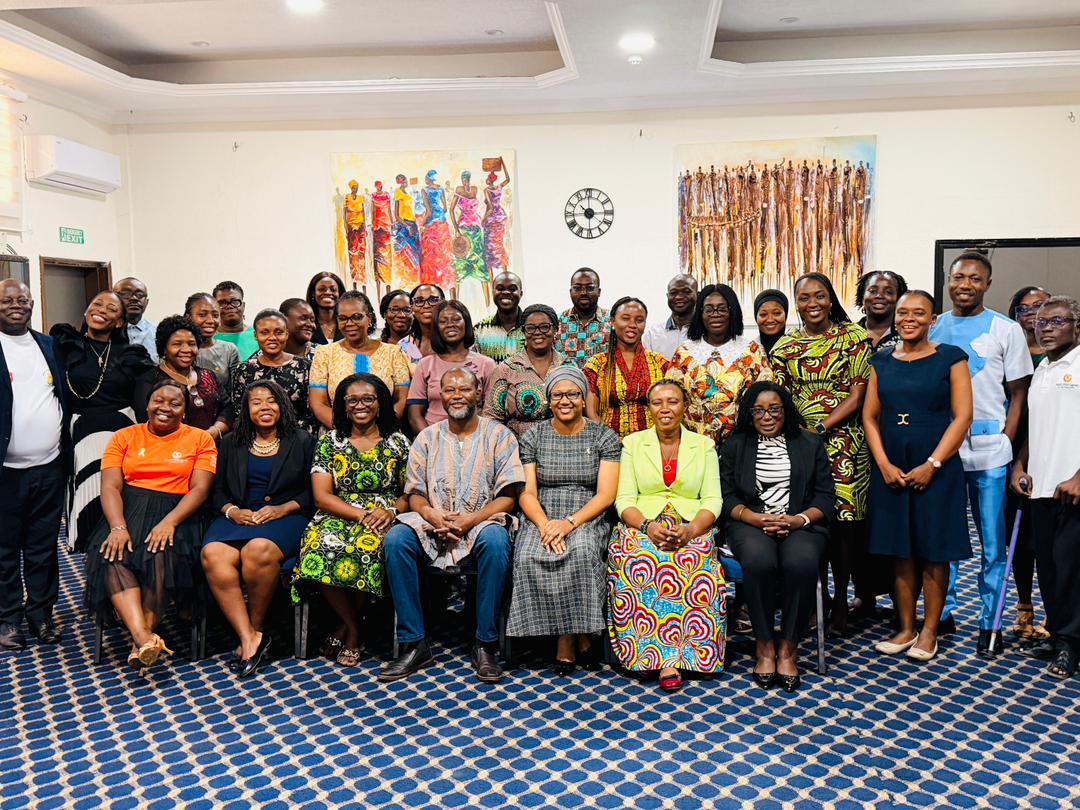
The Ghana Health Service (GHS), in collaboration with World Child Cancer, has held a stakeholder validation meeting to review and fine-tune draft National Nutrition Guidelines designed to improve care for children with cancer in Ghana.
The meeting brought together key experts and stakeholders to assess the draft guidelines, provide input on their practicality and implementation, and build consensus on final recommendations to guide the nutritional management of paediatric cancer patients in line with global best practices.

Nutrition Critical in Childhood Cancer Care
Speaking at the event, Adwoa Pinamang Boateng Desu, Country Coordinator for World Child Cancer Ghana, emphasised the vital role nutrition plays in treatment and survival.
“Nutrition determines how a child is able to tolerate treatment, adhere to therapy, and improve survival outcomes,” she said.
She highlighted findings from a 2019 study by Salifu et al. at the Korle Bu Teaching Hospital, which revealed that a significant number of children were malnourished at diagnosis.
These findings informed a project funded by World Child Cancer, launched in 2023 and concluding in March 2026. The project includes a nutrition intervention supporting patients, navigators, and healthcare providers through training, diagnostics, and transport assistance.
“The nutrition component of this project is vital,” Ms. Desu said. “This guideline will provide structure and clarity in the support we provide to children with cancer nutritionally.”
Stakeholder Validation Process
The validation process involved the formation of a technical working group, the development of a draft guideline, multiple reviews, and consultation with a wider group of stakeholders, including the Ministry of Health, Clinton Health Access Initiative, Cure Childhood Cancer, and the Paediatric Society of Ghana.
“Once we integrate stakeholders’ input, we will train healthcare professionals on the use of the guideline and then disseminate it widely, ensuring ownership and proper implementation,” she added.
Public Awareness and Advocacy
Ms. Desu also discussed progress in public perception of childhood cancer. “Initially, many parents and guardians associated childhood cancer with spiritual causes or a death sentence. We have come a long way, but we continue to raise awareness on early warning signs and symptoms, targeting healthcare professionals, the public, and the media,” she said.
She noted that while four types of childhood cancer are covered under the National Health Insurance Scheme, treatment remains costly, and additional support is essential.
“We call on everyone to partner with us through donations, in-kind contributions, or financial support to help children in care,” she urged.

Malnutrition Emerges as Hidden Driver of Poor Outcomes
A Paediatric Oncologist at the Greater Accra Regional Hospital, Dr. Nihad Salifu, also raised concerns that malnutrition is significantly undermining treatment outcomes for children with cancer in Ghana, warning that survival chances remain closely tied to timely and sustained nutritional support.
She explained that childhood cancer both triggers and worsens malnutrition, with treatment processes further compounding the problem, leaving many young patients too weak to respond effectively to therapy.
Dr. Salifu noted that a child’s nutritional status at diagnosis and throughout treatment is a critical determinant of recovery, stressing that severe malnutrition often leads to complications, prolonged hospitalisation, and, in some cases, death.
“Cancer itself is a risk factor for malnutrition, and the condition progressively worsens as treatment continues. Without deliberate nutritional intervention, outcomes become significantly poorer,” she said.
According to her, cancers affecting the head, neck, and abdominal regions present even greater risks, as they directly interfere with eating, swallowing, and digestion.
She added that about 70 per cent of childhood cancer cases in Ghana are diagnosed at advanced stages, worsening their nutritional condition from the outset.
Dr. Salifu further explained that chemotherapy and other treatments contribute to malnutrition through side effects such as nausea, vomiting, appetite loss, mouth sores, altered taste, diarrhoea, and poor nutrient absorption.
“These side effects make feeding extremely difficult for children. In many cases, even the smell of food becomes intolerable during treatment,” she said.
She warned that malnutrition weakens immunity, increasing vulnerability to infections, delaying treatment cycles, and placing additional emotional and financial strain on families due to extended hospital stays.
While both undernutrition and overnutrition can affect outcomes, Dr. Salifu said undernutrition remains the most widespread challenge among paediatric cancer patients in Ghana.
Citing studies from the Korle Bu Teaching Hospital, she noted high levels of stunting and wasting at diagnosis, with many children remaining malnourished even after months of treatment due to limited structured nutritional support.
She called for the development and implementation of standardised national guidelines for nutritional care in childhood cancer treatment to ensure early intervention and consistency across health facilities.
Dr. Salifu also shared a case in which a critically ill child with metastatic cancer made significant recovery after receiving intensive nutritional rehabilitation alongside treatment, describing it as evidence of what coordinated care can achieve.
“Even in severe cases, sustained nutritional support can dramatically improve survival and quality of life,” she said.
She called for the integration of nutrition into routine childhood cancer care, alongside improved training for health professionals and increased investment in paediatric nutrition services to strengthen survival outcomes nationwide.

Expert Insights on Nutrition and Survival
The Director of Allied Health at the Ministry of Health, Dr. Ignatius Awinibuno, underscored the critical role of nutrition in improving survival outcomes.
“Children remain among the most vulnerable groups and require comprehensive, well-coordinated care,” he said, noting that while survival rates exceed 80 percent in high-income countries, they remain below 30 percent in low- and middle-income countries.
He explained that malnutrition increases treatment complications, reduces therapy tolerance, and negatively affects recovery and survival.
Overview of the Guidelines
Dr. Olivia Timpo, Deputy Director of Nutrition at the Ghana Health Service, provided an overview of the draft guidelines, noting that the document comprises six chapters covering the purpose, scope, and objectives; nutritional assessment methods; clinical and dietary interventions; community-based support; and monitoring and evaluation.
READ ALSO: World Child Cancer Ghana Calls for Holistic, People-Centred Approach to Childhood Cancer Care
Dr. Timpo stressed that the guidelines offer practical, evidence-based strategies to support healthcare providers at all levels, ensuring children receive optimal nutrition from diagnosis through treatment. Standardised care will also facilitate training, improve treatment outcomes, and enable consistent data collection for research and programme evaluation.
A Step Forward for Childhood Cancer Care
The stakeholders’ meeting represents a significant step toward strengthening nutrition support for children with cancer in Ghana. By reducing treatment complications, enhancing recovery, and improving long-term survival outcomes, the National Nutrition Guidelines aim to standardise care and align it with global best practices.


Source: Isaac Kofi Dzokpo
